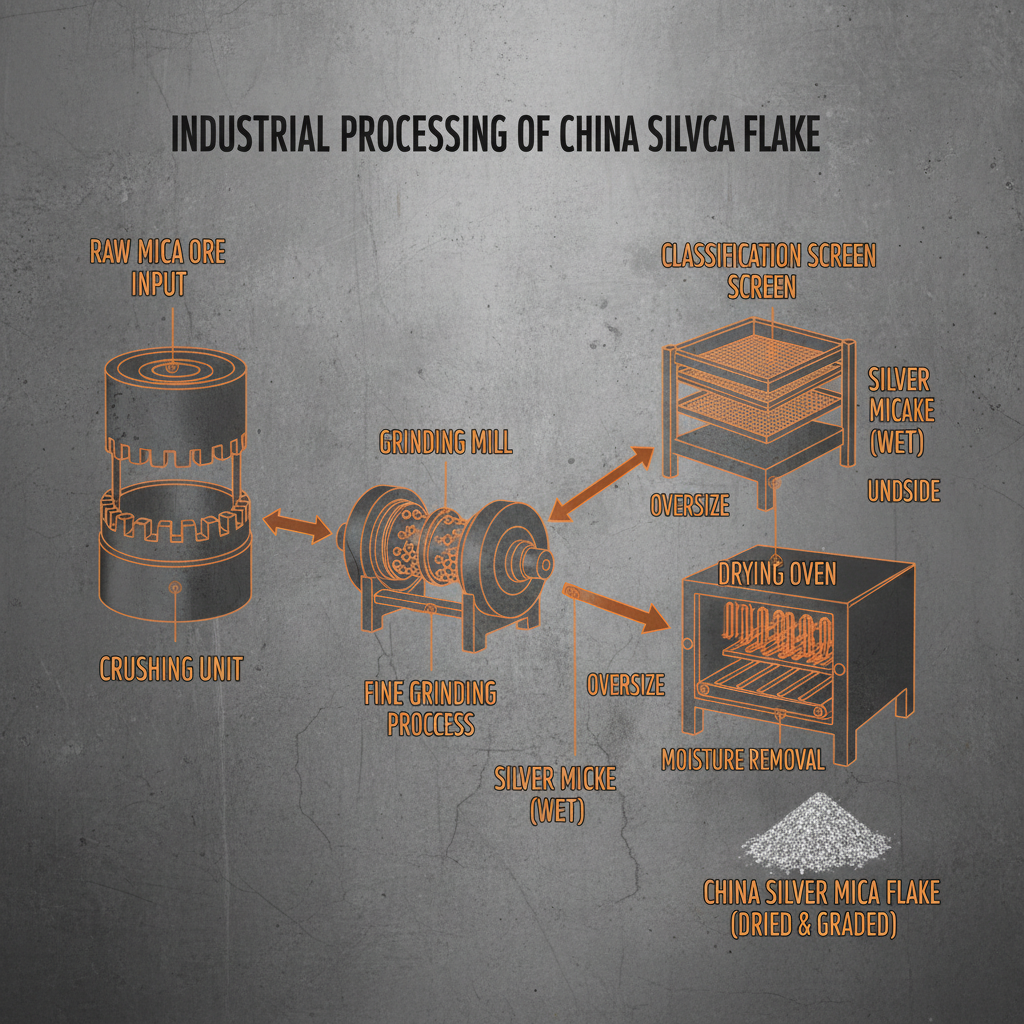
Mica flakes for oil drilling represent a crucial component in modern drilling operations, significantly enhancing wellbore stability and minimizing formation damage. Their unique platy structure and chemical inertness make them ideal for creating a filter cake that prevents fluid loss into the surrounding formation, thereby improving drilling efficiency and reducing costs. Understanding the properties and applications of these specialized mica flakes is paramount for optimizing drilling performance and ensuring the long-term integrity of oil and gas wells.
The demand for mica flakes in oil drilling is directly linked to the continued exploration and production of oil and gas reserves, particularly in challenging environments such as shale formations and deepwater drilling. Global energy needs drive this demand, necessitating innovative solutions to overcome the technical hurdles associated with extracting resources from increasingly complex geological settings. Utilizing mica flakes effectively addresses these challenges, contributing to a more sustainable and economical energy supply.
The increasing focus on environmental responsibility within the oil and gas industry further emphasizes the importance of mica flakes for oil drilling. By minimizing formation damage and reducing fluid loss, these materials help to prevent contamination of groundwater and reduce the overall environmental footprint of drilling operations. Their role in responsible resource extraction is becoming increasingly vital in a world demanding cleaner and more sustainable energy solutions.
The Critical Role of mica flakes for oil drilling
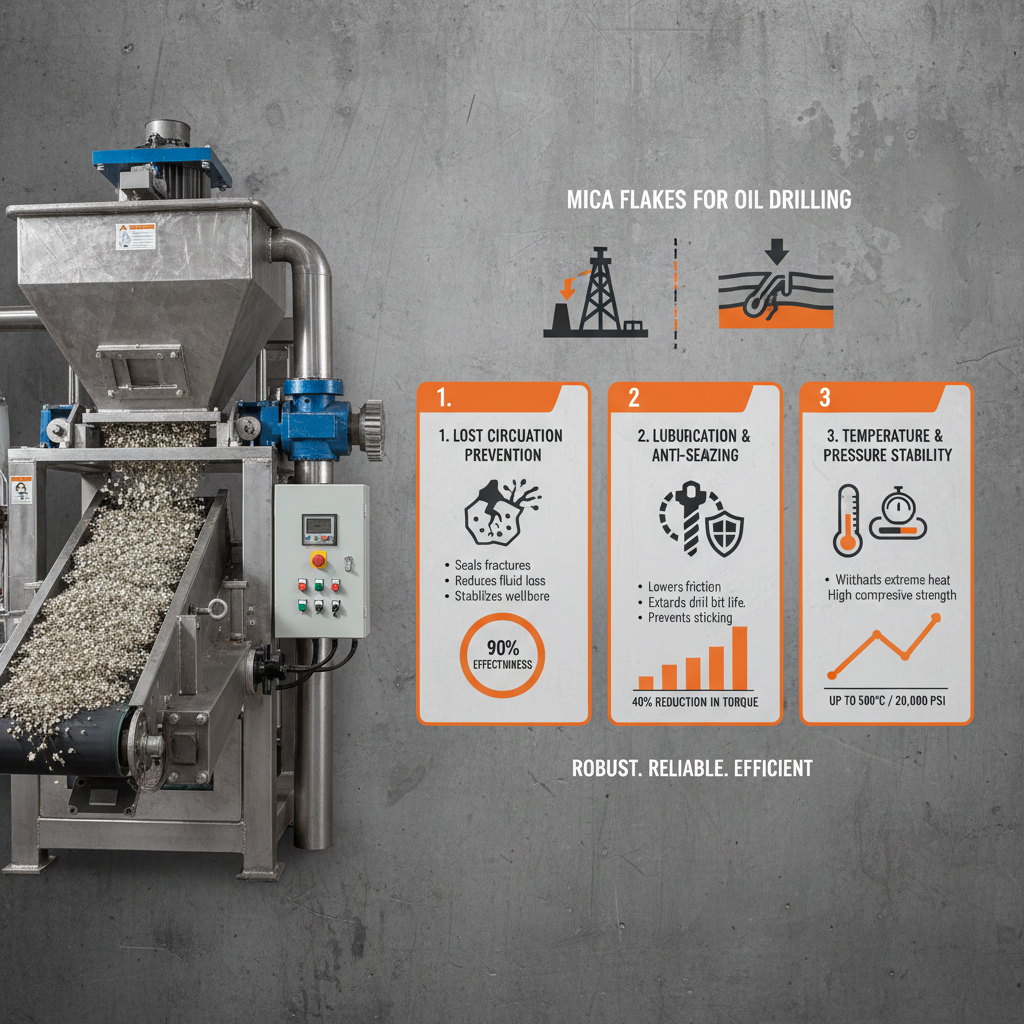
Mica flakes play a pivotal role in enhancing the performance of drilling fluids used in oil and gas exploration. Their primary function is to control fluid loss, preventing the drilling mud from invading the surrounding formation and causing damage. This is particularly critical in shale formations where formation damage can severely reduce permeability and well productivity.
The strategic incorporation of mica flakes for oil drilling contributes significantly to wellbore stability, minimizing the risk of collapse or washouts. This results in safer and more efficient drilling operations, reducing non-productive time and overall project costs. They also serve to encapsulate cuttings, facilitating their removal from the wellbore and maintaining a cleaner drilling environment.
Understanding Mica Flake Composition and Properties
Mica flakes are naturally occurring minerals belonging to the phyllosilicate group. They are characterized by their unique layered structure, which allows them to easily separate into thin, flexible sheets. These flakes are typically composed of potassium aluminum silicate, though variations exist depending on the specific type of mica. The platy morphology of mica flakes is key to their functionality in drilling fluids.
Different types of mica, such as muscovite and phlogopite, offer varying properties suitable for specific drilling applications. Muscovite mica exhibits high thermal stability and dielectric strength, while phlogopite mica generally has a lower iron content and is more resistant to chemical attack. Selecting the appropriate mica flake type is crucial for optimizing performance in diverse drilling conditions.
The particle size distribution of mica flakes for oil drilling is also a critical parameter. A controlled particle size distribution ensures effective fluid loss control and prevents the formation of excessive filter cake buildup. Customized sizing options are available to cater to the unique requirements of different formations and drilling fluids.
Key Benefits of Using mica flakes for oil drilling
The implementation of mica flakes in drilling operations provides a multitude of benefits. Primarily, it reduces fluid loss, which minimizes formation damage and enhances well productivity. This directly translates to increased oil or gas recovery and a higher return on investment. The controlled permeability achieved through filter cake formation also minimizes differential sticking risks.
Furthermore, the use of mica flakes can extend the lifespan of drilling tools by reducing abrasive wear caused by solid particles. This, coupled with reduced non-productive time due to stuck pipe or wellbore instability, significantly lowers overall drilling costs. Mica flakes are also environmentally friendly, being a naturally occurring mineral with minimal environmental impact.
Finally, enhanced wellbore stability contributes to safer drilling operations, minimizing the risk of blowouts and other catastrophic events. The improved hole cleaning capabilities resulting from mica flake usage also contribute to a more efficient and reliable drilling process, especially in complex well geometries.
Applications in Diverse Drilling Environments
Mica flakes find widespread application across a range of drilling environments, including conventional oil and gas wells, shale gas formations, and deepwater drilling operations. In shale gas drilling, where formation damage is a major concern, mica flakes are essential for maintaining permeability and maximizing gas production.
Their effectiveness also extends to high-temperature, high-pressure (HTHP) wells, where the thermal stability of mica flakes ensures consistent performance under extreme conditions. They are frequently used in water-based mud systems, as well as in oil-based muds where compatibility and filtration control are paramount.
Filter Cake Quality with Different mica flakes for oil drilling
Long-Term Advantages and Cost-Effectiveness
The long-term advantages of incorporating mica flakes into drilling operations extend beyond immediate cost savings. Reduced formation damage translates to sustained well productivity over the life of the well, maximizing resource recovery and increasing profitability.
The enhanced wellbore stability provided by mica flakes minimizes the need for costly remedial work, such as cementing or casing repairs. Furthermore, the reduced wear and tear on drilling equipment lower maintenance costs and extend the lifespan of valuable assets. These cumulative benefits contribute to a significant improvement in the overall economic viability of drilling projects.
Future Trends and Innovations in Mica Flake Technology
Ongoing research and development efforts are focused on enhancing the performance of mica flakes through surface modifications and hybrid materials. Surface treatments can improve compatibility with different drilling fluids and enhance their dispersion characteristics, leading to more effective fluid loss control.
The development of nanocomposites incorporating mica flakes and other advanced materials holds promise for creating drilling fluids with superior properties. These innovations are driven by the industry's growing demand for more efficient, sustainable, and cost-effective drilling solutions. The integration of real-time monitoring and control systems will also optimize mica flake dosage, further enhancing performance.
Challenges and Solutions in mica flakes for oil drilling Implementation
Despite the numerous benefits, certain challenges exist in the implementation of mica flakes. Achieving optimal dispersion within drilling fluids can be difficult, particularly in high-salinity or high-density systems. Proper mixing and agitation are crucial for ensuring uniform distribution.
Another challenge relates to the potential for flocculation or agglomeration of mica flakes, which can reduce their effectiveness. The use of dispersants and stabilizers can mitigate this issue. Furthermore, careful selection of the appropriate mica flake type and particle size distribution is essential for maximizing performance in specific drilling environments.
Addressing these challenges requires a thorough understanding of drilling fluid chemistry and the properties of mica flakes. Collaboration between drilling fluid engineers and mica flake suppliers is key to developing tailored solutions that optimize performance and minimize potential issues.
Summary of Solutions for Common Challenges in mica flakes for oil drilling Application
| Challenge |
Root Cause |
Solution |
Implementation Cost (1-10) |
| Poor Dispersion |
Insufficient Mixing Energy |
Increase Agitation Rate, Optimize Mixer Design |
3 |
| Flocculation |
High Salinity or pH |
Add Dispersant/Stabilizer |
5 |
| Reduced Effectiveness |
Incorrect Mica Type |
Select Appropriate Mica for Formation |
4 |
| High Fluid Loss |
Improper Dosage |
Optimize Dosage based on Fluid Loss Tests |
2 |
| Filter Cake Build-Up |
Excessive Mica Concentration |
Reduce Mica Flake Concentration |
1 |
| Compatibility Issues |
Interaction with Drilling Fluid Additives |
Conduct Compatibility Testing |
6 |
FAQS
The optimal particle size of mica flakes for oil drilling typically falls within the range of 10-200 microns. Smaller particles provide greater surface area and more effective fluid loss control, while larger particles offer improved stability and reduce the risk of agglomeration. The specific ideal size depends on the formation characteristics, drilling fluid type, and desired filter cake properties. It is crucial to select a product with a narrow particle size distribution to ensure consistent performance.
Muscovite mica generally offers higher thermal stability and dielectric strength, making it suitable for high-temperature applications. Phlogopite mica, with its lower iron content, exhibits better chemical resistance and is often preferred in aggressive drilling environments. Choosing the right type depends on specific well conditions and fluid compatibility. Blends of both muscovite and phlogopite are also common to leverage the benefits of both.
Yes, mica flakes are considered environmentally friendly as they are naturally occurring minerals. They are non-toxic and pose minimal risk to the environment when handled responsibly. Using mica flakes for oil drilling contributes to more sustainable drilling practices by reducing formation damage and minimizing fluid loss, reducing overall environmental impact. Proper disposal procedures should always be followed.
The optimal dosage of mica flakes is determined through laboratory testing and field trials. Fluid loss tests are conducted to assess the effectiveness of different concentrations. Factors considered include the formation permeability, drilling fluid type, and desired filter cake thickness. Start with a low concentration and gradually increase it until the desired fluid loss control is achieved. Accurate monitoring and adjustment are essential.
Yes, mica flakes can be effectively used in both water-based and oil-based drilling fluids, although compatibility must be carefully considered. In oil-based muds, it's crucial to ensure the mica flakes are adequately wetted and dispersed to prevent settling or agglomeration. Specific dispersants may be required to maintain stability in oil-based systems.
Common challenges include poor dispersion, flocculation, and compatibility issues. Proper mixing, the use of dispersants, and careful selection of mica flake type are key to overcoming these issues. Thorough testing and collaboration with fluid engineers are also crucial for optimizing performance and avoiding potential problems.
Conclusion
In conclusion, mica flakes for oil drilling represent a vital technology for optimizing drilling operations, enhancing well productivity, and reducing environmental impact. Their unique properties, coupled with ongoing innovations, make them an indispensable component in the modern oil and gas industry. The benefits extend beyond immediate cost savings, contributing to long-term sustainability and resource recovery.
Looking ahead, continued research and development focusing on surface modifications and nanocomposites will further enhance the performance of mica flakes. Adopting a collaborative approach between fluid engineers and mica flake suppliers is essential for addressing the challenges associated with their implementation and maximizing their potential. Visit our website at www.kehuimica.com to learn more about our high-quality mica flake products and how they can benefit your drilling operations.