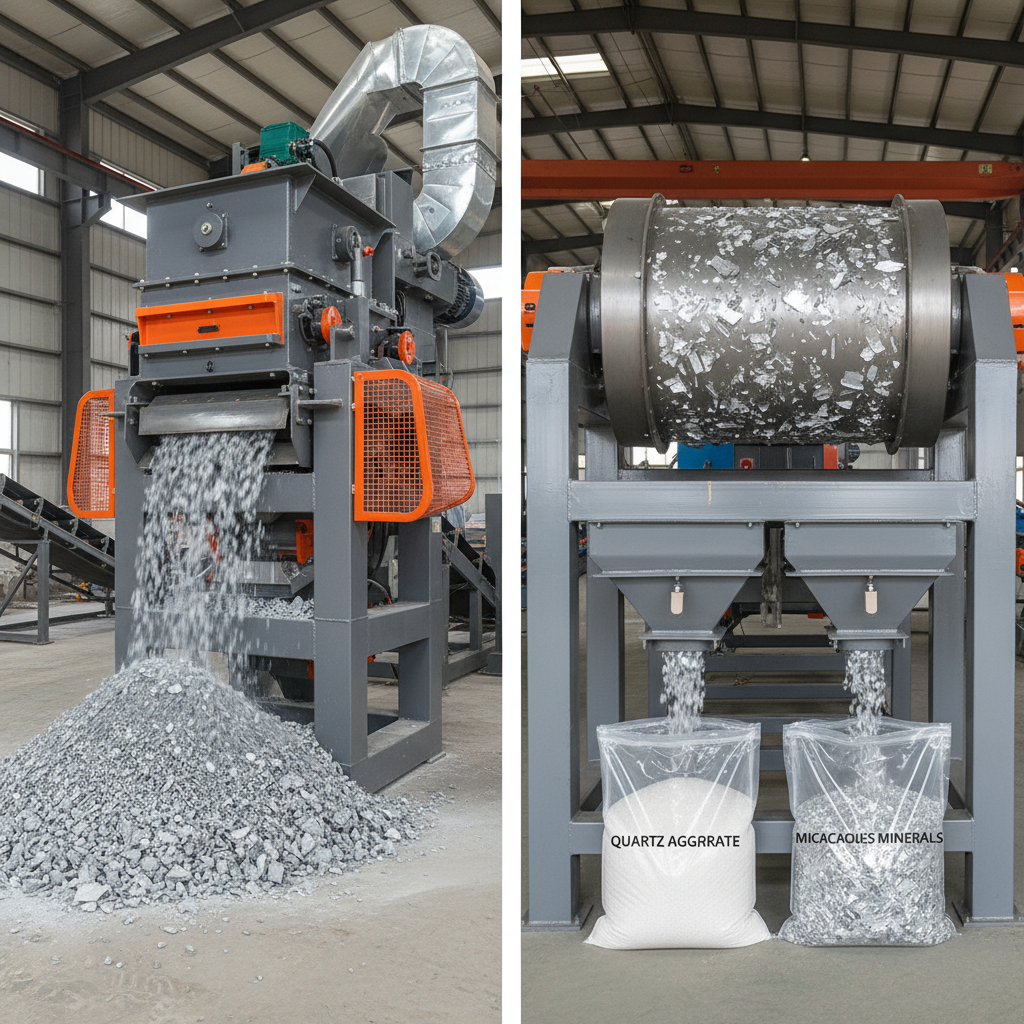
Mica flakes for paint represent a crucial component in achieving desired performance characteristics in a wide array of coating applications. Their unique platy structure imparts exceptional barrier properties, corrosion resistance, and aesthetic qualities to paints and coatings across diverse industries. Understanding the intricacies of mica flake selection, processing, and application is paramount for formulators seeking to optimize product performance and meet evolving market demands. mica flakes for paint are becoming increasingly vital as industries demand higher-performing, more sustainable coating solutions.
The global demand for high-performance coatings, driven by infrastructure development, automotive production, and industrial manufacturing, directly fuels the need for specialized additives like mica flakes. According to a recent report by Grand View Research, the global paints and coatings market size was valued at USD 183.66 billion in 2022 and is expected to grow at a compound annual growth rate (CAGR) of 5.5% from 2023 to 2030. This growth necessitates consistent innovation in additive technologies, with mica flakes playing a key role in meeting these expanding requirements.
The challenge lies in consistently sourcing high-quality mica flakes that deliver optimal dispersion, alignment, and performance in various paint formulations. Improperly processed or low-grade mica can lead to settling, reduced barrier properties, and compromised coating integrity. Therefore, reliable suppliers and robust quality control measures are essential for ensuring the success of coating applications utilizing mica flakes for paint.
Introduction to mica flakes for paint
Mica flakes for paint, naturally occurring mineral silicates, offer a unique set of properties that enhance the performance of a vast range of coating systems. These flakes, when incorporated into paint formulations, contribute to improved barrier properties, preventing the permeation of moisture, oxygen, and corrosive agents, leading to extended coating lifespan. mica flakes for paint contribute to cost-effective, long-lasting solutions.
Their platy morphology and inherent chemical inertness make them ideal for reinforcing coating matrices, increasing resistance to cracking, blistering, and delamination. This is particularly critical in demanding applications such as industrial coatings, marine paints, and automotive finishes where environmental exposure is severe. Properly selecting the appropriate grade and surface treatment of mica flakes is vital for optimizing performance characteristics and achieving desired aesthetic effects.
Defining mica flakes for paint
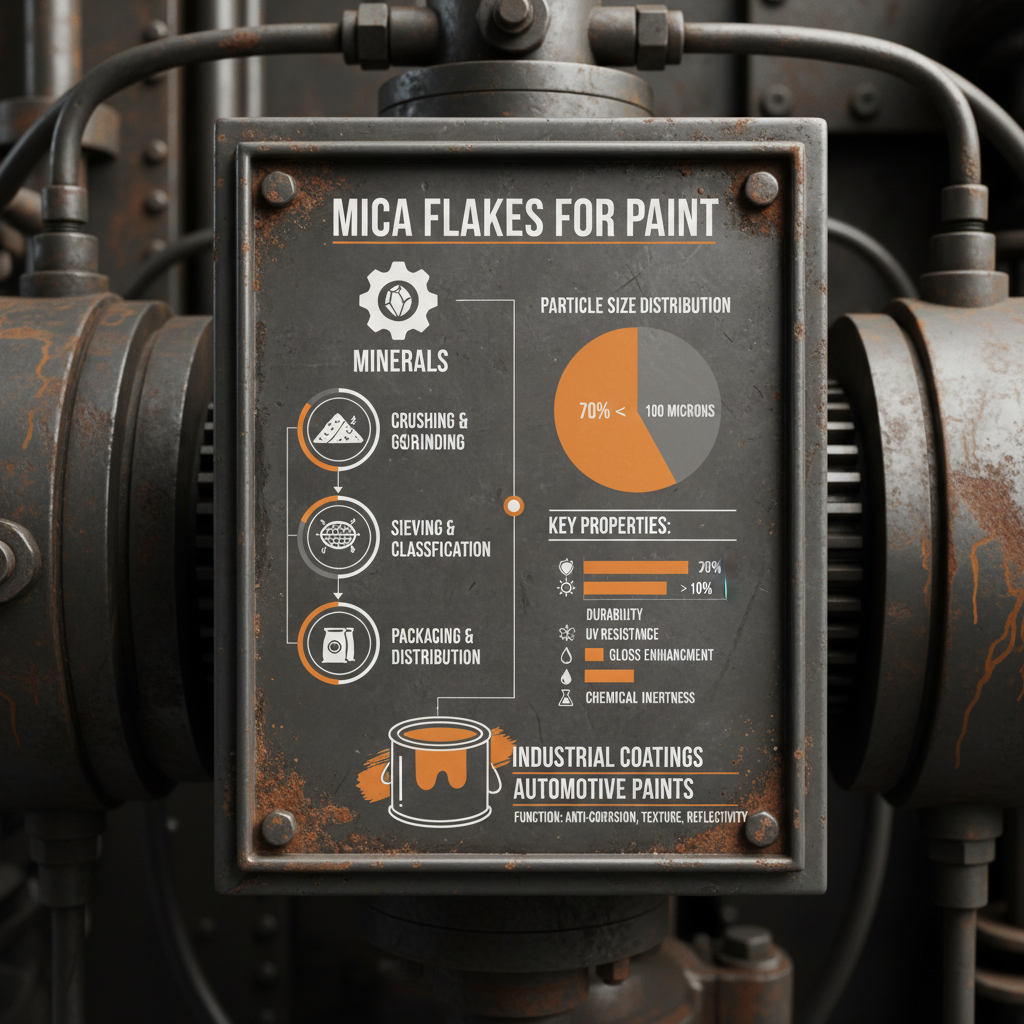
Mica flakes for paint are thin, plate-like particles derived from various mica minerals, predominantly muscovite and phlogopite. These minerals are naturally layered silicates, which are then processed through grinding and milling to create flakes of controlled size and thickness. The resulting product isn’t simply an inert filler; it’s a functional additive that fundamentally alters the physical and chemical properties of the paint film.
The quality of mica flakes used in paint is determined by factors like particle size distribution, aspect ratio (length-to-thickness), and surface treatment. Surface treatments, such as silane coupling agents, are often applied to enhance dispersion in the paint matrix, improve adhesion, and increase compatibility with various resin systems. These advancements unlock the full potential of mica flakes for paint.
Essentially, mica flakes for paint act as microscopic shields within the coating, creating a tortuous path for corrosive substances and UV radiation, thus extending the service life of the painted surface. This inherent protective capability makes them indispensable in high-performance coating applications.
Key Properties of mica flakes for paint
Several key properties contribute to the effectiveness of mica flakes for paint. Firstly, their exceptional barrier properties significantly reduce the permeability of coatings to water, oxygen, and other corrosive agents, enhancing long-term protection. Secondly, their platy structure imparts improved resistance to cracking, blistering, and delamination, extending coating service life. The unique structure of mica flakes for paint prevents catastrophic coating failure.
Another crucial property is their inertness, meaning they won’t react with the paint’s other components, ensuring long-term stability and consistent performance. Furthermore, their reflective nature can enhance the coating’s aesthetic appeal, contributing to improved gloss and color retention. Finally, the natural hydrophobicity of mica flakes assists in water shedding, adding to the protective benefits.
The aspect ratio of the flakes (length to thickness) is also critical. Higher aspect ratios generally lead to improved barrier properties and reinforcing effects, but can also pose dispersion challenges. Choosing the right aspect ratio for a specific paint formulation is a delicate balance that requires careful consideration.
Applications of mica flakes for paint
The versatility of mica flakes for paint extends to a wide range of applications, including industrial coatings, automotive paints, architectural finishes, and marine coatings. In industrial settings, they provide robust protection against corrosion in harsh environments, extending the lifespan of metal structures and equipment.
Within the automotive industry, mica flakes contribute to the durability and aesthetic appeal of car finishes, enhancing scratch resistance and color retention. Architectural coatings benefit from their ability to improve weatherability, UV resistance, and overall coating performance. Furthermore, mica flakes for paint are crucial for protecting marine vessels from the corrosive effects of saltwater.
mica flakes for paint Performance Across Applications
Advantages of Utilizing mica flakes for paint
The advantages of incorporating mica flakes for paint into coating formulations are multifaceted. Beyond the enhanced barrier properties and corrosion resistance, they contribute to improved mechanical strength, reducing the likelihood of cracking and chipping. This translates to lower maintenance costs and extended asset life. The use of mica flakes for paint delivers long-term value.
Furthermore, mica flakes can contribute to improved coating aesthetics, offering enhanced gloss, color retention, and a visually appealing finish. Their inherent UV resistance protects the underlying paint film from degradation, preserving color vibrancy over time.
Global Trends in mica flakes for paint
Global trends are increasingly focused on sustainable and high-performance coatings, driving demand for innovative additives like mica flakes for paint. There’s a growing emphasis on reducing VOC (Volatile Organic Compound) emissions, and mica flakes, being inert, don’t contribute to VOC levels. This makes them an attractive choice for environmentally conscious formulators.
Another significant trend is the development of surface-modified mica flakes with enhanced dispersion and compatibility characteristics. These advancements broaden their applicability across diverse resin systems and improve overall coating performance.
Additionally, the rise of powder coatings, known for their durability and environmental friendliness, is creating new opportunities for mica flake applications.
Challenges and Future Outlook for mica flakes for paint
Despite their numerous benefits, challenges remain in the utilization of mica flakes for paint. Achieving uniform dispersion, particularly at higher loadings, can be difficult, requiring optimized mixing techniques and surface treatments. Cost considerations can also be a factor, as high-quality mica flakes can be relatively expensive compared to other fillers.
Looking ahead, research and development efforts are focused on creating novel surface modifications to further enhance dispersion, compatibility, and performance. Exploring new mica mineral sources and refining processing techniques to reduce costs will also be crucial.
The future of mica flakes for paint looks promising, with continued innovation driving their adoption in a wider range of coating applications.
Summary of Challenges and Potential Solutions for mica flakes for paint
| Challenge |
Impact on Performance |
Potential Solution |
Implementation Cost (1-10) |
| Poor Dispersion |
Reduced barrier properties, uneven coating performance |
Surface modification with silane coupling agents |
6 |
| High Cost |
Limits adoption in cost-sensitive applications |
Explore alternative mica sources, optimize processing |
7 |
| Settling in Paint |
Reduced shelf life, inconsistent application |
Use of thixotropic additives, optimized flake size |
5 |
| Incompatible Resins |
Poor adhesion, reduced coating integrity |
Select resin-compatible surface treatments |
4 |
| Moisture Absorption |
Reduced coating performance, potential for corrosion |
Hydrophobic surface treatments |
5 |
| Limited UV Stability |
Color fading, coating degradation |
Combination with UV absorbers |
6 |
FAQS
The particle size range of mica flakes used in paint typically falls between 5 and 600 microns, depending on the application. Smaller flakes (5-20 microns) are often used for smoothness and gloss, while larger flakes (100-600 microns) provide enhanced barrier properties and corrosion resistance. Careful particle size control is critical for achieving optimal performance and avoiding settling or agglomeration within the paint matrix.
Surface treatment significantly impacts the performance of mica flakes by enhancing their compatibility with different paint resins and improving their dispersion. Common surface treatments, such as silanes, create a chemical bridge between the mica surface and the resin, promoting better adhesion, reducing settling, and increasing corrosion resistance. Selecting the appropriate surface treatment is crucial for maximizing the benefits of mica flakes in a specific coating system.
Muscovite and phlogopite are the two main types of mica used in paint. Muscovite offers higher brightness and clarity, making it suitable for applications where aesthetics are paramount. Phlogopite, on the other hand, exhibits better heat stability and resistance to chemical attack, making it preferred for industrial and high-performance coatings. The choice depends on the specific requirements of the application.
Yes, mica flakes can absolutely be used in water-based paints. However, proper surface treatment is especially important to ensure good dispersion and compatibility with the water-based resin system. Surface treatments that impart hydrophilicity are typically employed to facilitate even distribution and prevent settling. Careful formulation and mixing are also crucial for optimal performance.
The recommended loading level of mica flakes in paint varies depending on the desired performance characteristics and the specific paint formulation. Generally, loadings range from 3% to 15% by weight. Higher loadings provide enhanced barrier properties and corrosion resistance but can also affect viscosity and application properties. It's important to optimize the loading level through testing to achieve the desired balance of performance and processability.
Mica is a naturally occurring mineral, making it inherently more environmentally friendly than many synthetic additives. It doesn’t contribute to VOC emissions and is generally considered non-toxic. Furthermore, its use can extend the lifespan of coatings, reducing the need for frequent repainting and minimizing waste. Responsible sourcing practices are essential to ensure minimal environmental impact during extraction.
Conclusion
In conclusion, mica flakes for paint represent a versatile and highly effective additive for enhancing the performance and longevity of coatings across diverse industries. Their unique platy structure, inertness, and ability to be surface-modified offer a compelling combination of benefits, including improved barrier properties, corrosion resistance, mechanical strength, and aesthetic appeal. Understanding the nuances of mica flake selection, processing, and application is key to unlocking their full potential and creating innovative, high-performing coating solutions.
Looking forward, continued research and development focused on sustainable sourcing, advanced surface treatments, and optimized dispersion techniques will further expand the applications of mica flakes for paint. As industries increasingly prioritize durability, sustainability, and cost-effectiveness, the demand for these valuable additives is poised to grow significantly. Visit our website at www.kehuimica.com to explore our comprehensive range of mica flake products and discover how we can help you optimize your coating formulations.