In the demanding landscape of modern industrial insulation and electrical engineering, the muscovite mica sheet stands as a critical material known for its exceptional dielectric strength and thermal stability. As global industries push toward higher energy efficiency and more compact device designs, the reliance on materials that can withstand extreme heat without compromising structural integrity has never been greater.
The global adoption of muscovite mica sheets is driven by the necessity for reliable insulation in everything from aerospace components to domestic heating appliances. By leveraging the natural cleavage and chemical inertness of muscovite, engineers can ensure that high-voltage systems remain safe and operational even under volatile environmental conditions, reducing the risk of catastrophic failure.
Understanding the nuances of muscovite mica sheet specifications—ranging from thickness and purity to tensile strength—allows manufacturers to optimize their product lifecycles. Whether it is used as a heat shield or a capacitor dielectric, this material provides a unique combination of elasticity and rigidity that synthetic alternatives often struggle to replicate.
Global Relevance of Muscovite Mica Sheet
The global demand for muscovite mica sheet is intrinsically linked to the expansion of the electronics and energy sectors. With the rise of electric vehicles (EVs) and renewable energy grids, the need for high-performance thermal barriers has surged. According to industrial material standards, the ability of muscovite to remain stable at temperatures exceeding 500°C makes it indispensable for protecting sensitive circuitry from thermal runaway.
Beyond simple insulation, the material plays a pivotal role in ensuring the safety of high-voltage transformers and industrial furnaces. In regions with heavy industrialization, such as East Asia and Europe, the strict adherence to ISO quality standards for mineral insulators ensures that the muscovite mica sheet used in infrastructure can withstand decades of continuous thermal cycling without degrading.
Defining the Muscovite Mica Sheet Standard
At its core, a muscovite mica sheet is a thin, flexible layer of potassium aluminum silicate. Unlike other minerals, muscovite possesses a perfect basal cleavage, allowing it to be split into incredibly thin, transparent sheets that maintain high dielectric strength. This unique geological structure allows it to act as a natural capacitor, blocking electrical current while remaining physically pliable.
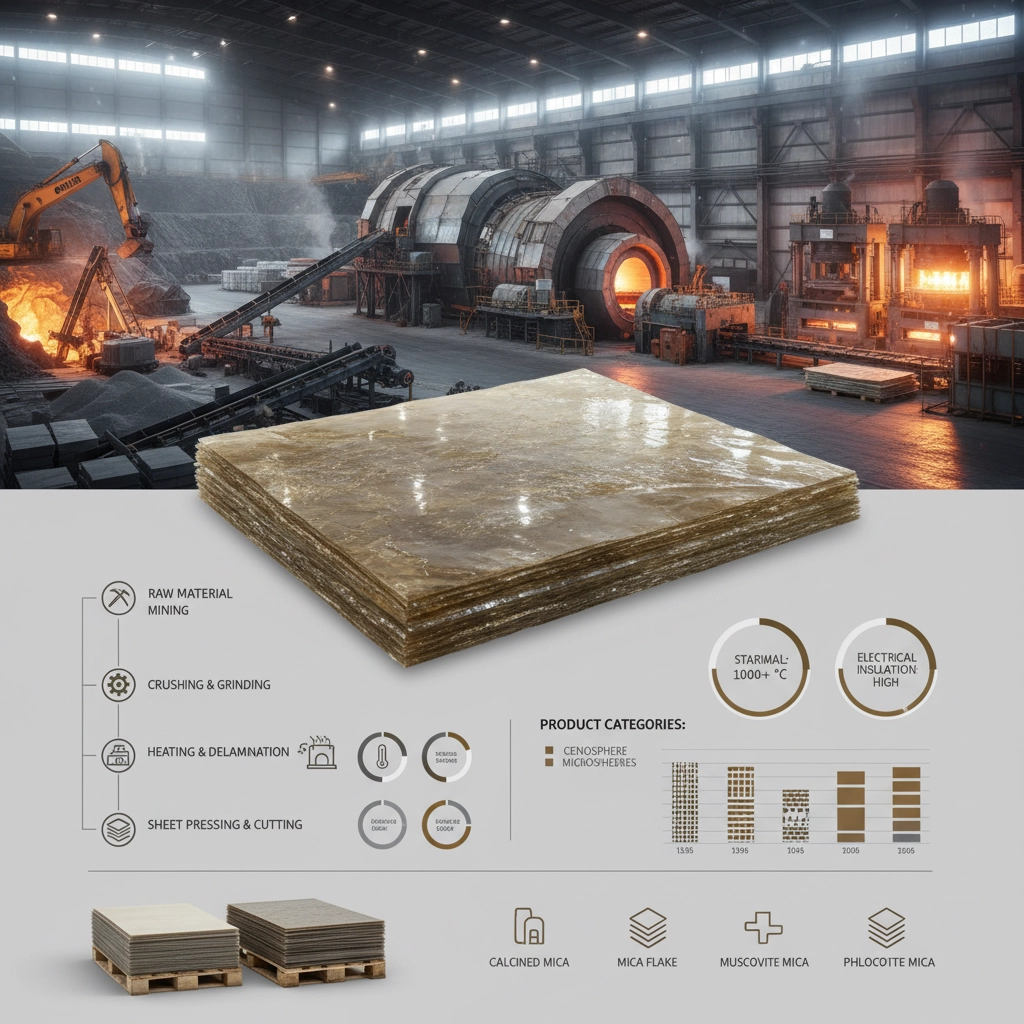
In the context of modern industry, these sheets are often processed into "bonded" or "natural" forms. Bonded sheets are created by layering thinner mica flakes with a resin binder, providing enhanced mechanical strength and custom thickness, whereas natural sheets are prized for their absolute purity and maximum heat resistance in vacuum environments.
The connection to humanitarian and safety needs is evident in the medical and aerospace fields. For instance, in high-precision medical imaging equipment, the use of high-grade mica sheets prevents electrical arcing, ensuring that life-saving diagnostic tools operate without interference or danger to the patient.
Core Technical Components of Mica Insulation
One of the primary factors defining the quality of a muscovite mica sheet is its thermal conductivity. Because it has very low thermal conductivity perpendicular to the sheet plane, it serves as an ideal barrier, preventing heat from transferring to adjacent components in densely packed electronic assemblies.
Dielectric strength is another critical component. A high-quality muscovite mica sheet can withstand thousands of volts per millimeter, making it far superior to many polymer-based insulators. This prevents electrical leakage and breakdown in high-frequency applications, ensuring long-term device reliability.
Finally, chemical inertness ensures that the muscovite mica sheet does not react with acids, alkalis, or organic solvents. This makes it a preferred choice for industrial chemical reactors and corrosive environments where traditional plastic insulators would melt or dissolve.
Performance Metrics and Scalability
When evaluating the scalability of muscovite mica sheet integration, engineers look at the balance between thickness and flexibility. As components shrink, the ability to produce ultra-thin sheets without losing dielectric integrity becomes the primary performance metric.
The following data illustrates how different processing methods for muscovite mica sheets impact their effectiveness across various industrial requirements, such as heat resistance and mechanical durability.
Performance Comparison of Muscovite Mica Sheet Types
Industrial Use Cases and Global Applications
In the aerospace industry, the muscovite mica sheet is used as a critical heat shield for engine components. In remote industrial zones, such as deep-sea drilling rigs or Arctic mining stations, mica's resistance to extreme temperature fluctuations ensures that control panels and power distributors do not fail in hostile climates.
Furthermore, in the consumer electronics sector, these sheets are found in high-end hair dryers, toasters, and microwave ovens. By acting as a safe barrier between the heating element and the outer casing, the muscovite mica sheet prevents electrical leakage and ensures user safety, demonstrating its versatility from heavy industry to everyday household items.
Long-Term Value and Sustainability Benefits
The long-term value of implementing a muscovite mica sheet lies in its extraordinary durability. Unlike synthetic polymers that degrade over time due to UV exposure or oxidation, mica is a naturally stable mineral. This reduces the frequency of replacement parts, thereby lowering the total cost of ownership for industrial plants.
From a sustainability perspective, mica is a natural mineral that, when sourced responsibly, offers a lower carbon footprint than the energy-intensive production of complex fluoropolymers. The stability of the material also means fewer hazardous waste products are generated from worn-out insulation.
Beyond the logical benefits of cost and environment, there is an emotional angle of trust. Engineers rely on the proven track record of mica to prevent fires and explosions in high-risk environments, providing peace of mind and operational dignity to workers in hazardous zones.
Future Innovations in Mica Technology
The future of muscovite mica sheet technology is moving toward "nano-mica" composites. By integrating mica platelets into advanced polymer matrices, researchers are creating hybrid materials that combine the flexibility of plastics with the extreme heat resistance of mica, paving the way for more efficient electric vehicle batteries.
Digital transformation is also playing a role through automated precision cutting and laser-drilling techniques. This allows for the creation of muscovite mica sheets with complex geometries, enabling more compact designs in 5G base stations and satellite communications where space is at a premium.
Sustainability policies are driving the industry toward closed-loop recycling. New methods are being developed to reclaim mica from decommissioned electronics, ensuring that the mineral's value is preserved and its environmental impact is further minimized.
Comparative Analysis of Muscovite Mica Sheet Applications
| Application Field |
Critical Requirement |
Mica Performance (1-10) |
Key Benefit |
| EV Battery Packs |
Thermal Runaway Prevention |
9 |
Fire barrier reliability |
| Aerospace Engines |
Extreme Heat Resistance |
10 |
Structural stability at 600°C |
| Home Appliances |
Electrical Isolation |
8 |
Cost-effective safety |
| Power Transformers |
Dielectric Strength |
10 |
Prevention of arcing |
| Chemical Reactors |
Corrosion Resistance |
9 |
Inertness to strong acids |
| Medical Imaging |
High Purity / Low Noise |
9 |
Signal clarity & safety |
FAQS
Natural muscovite mica sheets are split directly from the mineral, offering the highest purity and temperature resistance, ideal for vacuum or high-heat applications. Bonded sheets are composed of mica flakes combined with a resin or glass binder, which allows for customized thicknesses and improved mechanical strength for structural insulation.
Muscovite mica is naturally stable at very high temperatures, often resisting heat up to 500-600°C without melting or losing its dielectric properties. This makes it superior to plastic or rubber insulators, which would degrade or ignite at a fraction of those temperatures.
Yes, muscovite mica is chemically inert and does not react with most acids, alkalis, or organic solvents. This makes the muscovite mica sheet an excellent choice for gaskets, seals, and insulators in chemical processing plants where other materials would corrode.
Due to its unique crystal structure, natural muscovite is quite flexible and can be bent or wrapped around curved surfaces without cracking. Bonded versions are slightly stiffer but can be manufactured to specific flexibility grades depending on the binder used.
Selection depends on the voltage and temperature requirements. For high-voltage isolation, thicker sheets or multiple layers are needed to prevent electrical breakdown. For heat shields in compact electronics, ultra-thin sheets are preferred to save space while maintaining thermal barriers.
Mica is a naturally occurring mineral, making it a sustainable alternative to many synthetic polymers. When sourced from ethical mines and used in long-life industrial components, it reduces waste and the carbon footprint associated with frequent synthetic material replacements.
Conclusion
In summary, the muscovite mica sheet remains an irreplaceable cornerstone of modern industrial insulation. Its unique blend of dielectric strength, thermal stability, and chemical inertness allows it to solve critical engineering challenges across the aerospace, automotive, and electronics sectors. By bridging the gap between natural mineral properties and precision industrial needs, it ensures the safety and efficiency of the technologies we rely on daily.
Looking forward, the integration of mica into nano-composites and the adoption of greener sourcing practices will only enhance its value. For manufacturers and engineers seeking to optimize their thermal and electrical insulation, investing in high-purity muscovite mica is a strategic move toward long-term reliability and sustainability. Visit our website to learn more: www.kehuimica.com