In the specialized field of non-metallic mineral products, mica coarse stands as a critical raw material known for its exceptional thermal stability and electrical insulation properties. Unlike finely ground powders, the coarse morphology of these minerals allows for specific structural reinforcements and filtration capabilities that are indispensable in heavy industrial applications. Understanding the nuances of grain size and mineral purity is essential for engineers seeking to optimize the performance of high-temperature gaskets and electronic substrates.
Globally, the demand for mica coarse has surged as industries transition toward more resilient and sustainable material architectures. From the automotive sector to aerospace engineering, the ability of coarse mica particles to withstand extreme thermal shock while maintaining chemical inertness makes them a preferred choice over synthetic alternatives. As global standards for energy efficiency and safety tighten, the strategic selection of mica grades becomes a pivotal factor in product longevity.
This comprehensive guide explores the technical dimensions, industrial utility, and future trajectory of mica coarse. By examining its core components—such as Phlogopite and Muscovite varieties—and its application in modern manufacturing, we aim to provide a professional roadmap for procurement specialists and materials scientists. Whether you are optimizing a composite matrix or designing a heat shield, understanding the physical behavior of coarse mica is the first step toward innovation.
Global Industrial Context of Mica Coarse
The global market for mica coarse is deeply intertwined with the evolution of high-temperature electronics and heavy-duty insulation. According to industrial mineral trends aligned with ISO quality standards, the shift toward electrification in the automotive sector has created an urgent need for materials that can manage heat dissipation without compromising electrical isolation. Coarse mica, with its unique lamellar structure, provides a physical barrier that prevents dielectric breakdown in high-voltage environments.
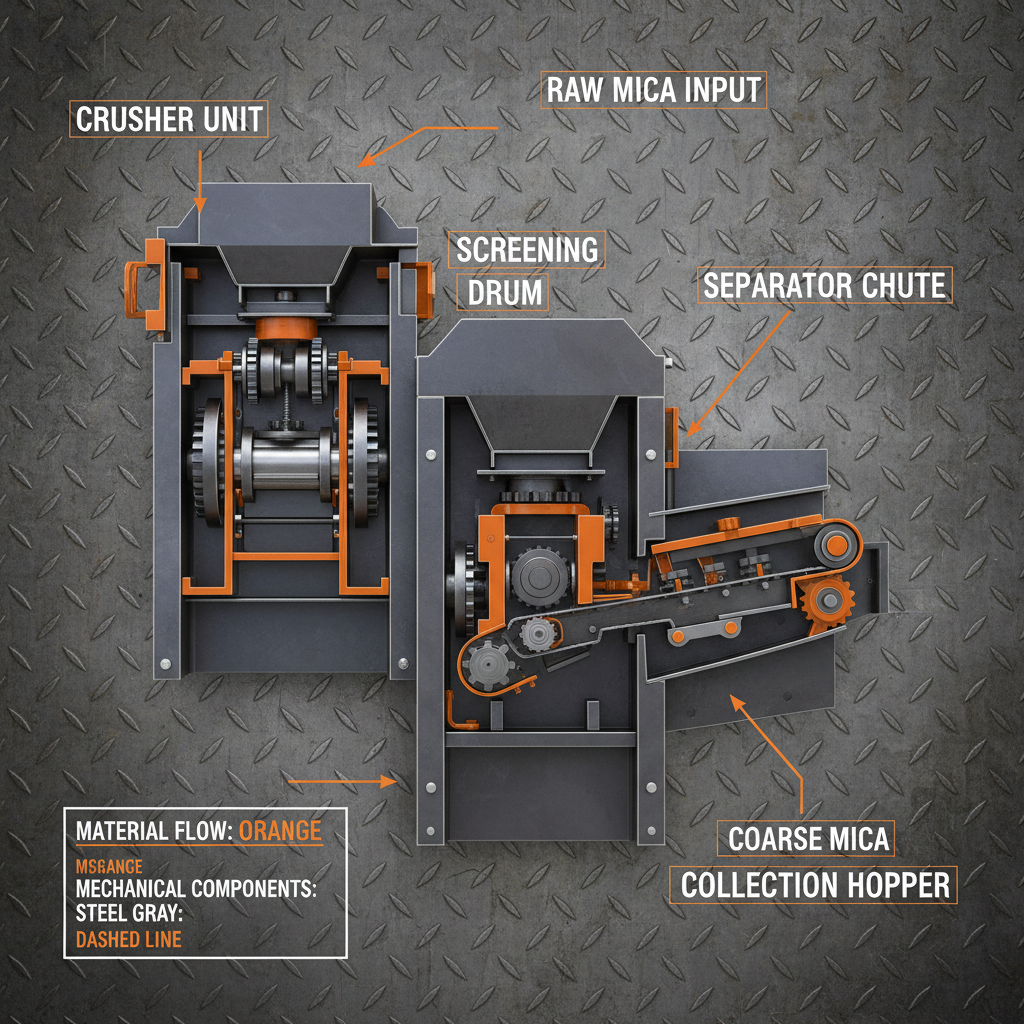
However, the industry faces a significant challenge in sourcing consistent, high-purity coarse grains. Many traditional mining operations struggle with the "over-grinding" of minerals, resulting in a surplus of fine powder and a shortage of quality coarse fractions. This supply-demand gap has pushed manufacturers to seek more precise crushing and screening technologies to ensure that the mica coarse maintains its structural integrity for specialized industrial use.
Defining the Technical Properties of Mica Coarse
In simple technical terms, mica coarse refers to mica minerals—primarily Muscovite and Phlogopite—that have been processed to retain a larger particle size, typically measured in millimeters rather than microns. This coarse granularity is essential because it preserves the natural "flakes" or "sheets" of the mineral, which act as natural insulators. When these coarse particles are integrated into a composite, they create a staggered, overlapping architecture that is far more effective at blocking heat and electricity than a homogenized powder.
From a mineralogical perspective, the connection to modern industry lies in its chemical stability. Coarse mica is virtually impervious to most acids and alkalis, making it indispensable for chemical processing plants and corrosive environments. By maintaining a coarse grain, the material reduces the total surface area exposed to chemical attack compared to fine powders, thereby increasing the overall lifespan of the industrial components it protects.
Furthermore, mica coarse serves as a bridge between raw geological resources and high-precision engineering. It is not merely a "crushed stone" but a engineered mineral product where the aspect ratio (length-to-thickness) is carefully controlled. This allows the material to be used in "paper-like" layers or as a structural filler in high-performance ceramics, ensuring that humanitarian and industrial needs for safety-critical insulation are met.
Core Factors Influencing Mica Coarse Performance
The primary factor determining the efficacy of mica coarse is its thermal dielectric strength. In high-voltage applications, the coarse nature of the mica prevents the formation of continuous conductive paths, effectively mitigating the risk of electrical arcing. This makes it a cornerstone for the production of heating elements and power transformers where failure is not an option.
Another critical aspect is mechanical durability. Because mica coarse retains its flake structure, it provides superior reinforcement in polymer matrices. This "bridging effect" prevents crack propagation in composites, ensuring that industrial linings and shields can withstand physical impact and vibration without crumbling, which is a common failure point in fine-particle fillers.
Finally, chemical purity and scalability play a massive role in cost efficiency. The removal of iron oxides and other impurities from the coarse fraction ensures that the material remains non-conductive. For large-scale industrial projects, the ability to source consistent grades of mica coarse allows companies to standardize their manufacturing processes, reducing waste and lowering the total cost of ownership for end-users.
Global Applications and Industrial Use Cases
The real-world application of mica coarse spans across multiple continents, with high adoption rates in the industrial hubs of East Asia and Europe. In the energy sector, coarse mica is used to create high-temperature seals and gaskets for steam turbines. These components must operate in environments where temperatures exceed 800°C, and the coarse mineral structure provides the necessary thermal barrier to protect sensitive machinery from catastrophic heat failure.
In more specialized contexts, such as remote industrial zones or aerospace testing facilities, mica coarse is utilized in the fabrication of heat shields for reentry vehicles and satellite components. Its ability to reflect infrared radiation and resist melting makes it a critical safety material. Similarly, in the construction of high-voltage furnaces, the coarse grain allows for better air permeability while maintaining rigid electrical insulation, preventing leakage currents that could lead to industrial accidents.
Performance Analysis of Different Mica Coarse Grades
Long-Term Value and Sustainability Advantages
Investing in high-quality mica coarse offers tangible long-term economic benefits. From a reliability perspective, components reinforced with coarse mica have a significantly lower failure rate in extreme environments, reducing the frequency of costly industrial shutdowns. This reliability builds deep trust between manufacturers and end-users, as the safety margins provided by mica-based insulation are well-documented and predictable.
From a sustainability angle, mica coarse is a natural mineral that, when sourced responsibly, has a lower carbon footprint than many synthetic ceramic replacements. Its extreme durability means that products last longer, reducing the volume of industrial waste sent to landfills. Furthermore, the innovation in "green mining" for coarse minerals ensures that the ecological impact is minimized, aligning industrial growth with global environmental commitments.
Future Trends in Coarse Mica Innovation
The future of mica coarse is being shaped by the digital transformation of materials science. We are seeing the emergence of "Smart Mica Composites," where coarse mica is integrated with nano-sensors to monitor thermal stress in real-time. This allows for predictive maintenance in power grids and aircraft engines, where the mica coarse provides the structural insulation while the sensors provide the data.
Additionally, the trend toward green energy, specifically the expansion of solid-state batteries and high-efficiency EVs, is driving demand for ultra-pure coarse mica. These new technologies require materials that can prevent internal shorts at higher temperatures than ever before. Automation in the screening process is also allowing for "custom-grain" mica coarse, where particles are sorted by precise aspect ratios to meet specific aerospace specifications.
Finally, we expect a shift toward circular economy models in the non-metallic mineral industry. Research is currently focused on the recovery and recycling of coarse mica from decommissioned industrial equipment. By developing methods to clean and re-grade used mica, the industry can create a closed-loop system that maintains the high performance of mica coarse while reducing the reliance on virgin mining.
Overcoming Challenges in Mica Coarse Processing
Despite its advantages, the production of mica coarse is plagued by the challenge of "grain fragility." Because mica naturally cleaves into thin sheets, the process of crushing it into a coarse size often results in unwanted fragmentation. To solve this, industry experts are adopting "low-impact" crushing technologies, such as pneumatic sorting and centrifugal screening, which preserve the natural flake size and prevent the material from turning into dust.
Another limitation is the inconsistency of raw mineral deposits. Depending on the geographical source, the chemical composition of mica coarse can vary, leading to unpredictable performance in sensitive electronic applications. The solution lies in the implementation of rigorous batch-testing and blending protocols, ensuring that every shipment meets a standardized purity threshold before it reaches the assembly line.
Lastly, the industry must address the logistical challenge of transporting coarse minerals without causing attrition. Standard shipping methods often lead to the "grinding" of coarse particles during transit. Innovative packaging solutions, such as vacuum-sealed reinforced containers, are being introduced to ensure that the mica coarse arrives at the factory with its physical dimensions intact.
Technical Comparison of Mica Coarse Processing and Quality Metrics
|
Processing Method
|
Particle Retention Rate
|
Purity Level (%)
|
Industrial Suitability
|
|
Traditional Jaw Crushing
|
Low (40-50%)
|
85%
|
General Construction
|
|
Pneumatic Sorting
|
High (80-90%)
|
92%
|
High-Voltage Insulation
|
|
Centrifugal Screening
|
Medium (60-70%)
|
95%
|
Precision Electronics
|
|
Manual Flake Selection
|
Very High (95%+)
|
98%
|
Aerospace Grade
|
|
Hydraulic Separation
|
Medium (50-60%)
|
90%
|
Chemical Linings
|
|
Ultra-Sonic Grading
|
High (85-95%)
|
97%
|
Smart Composites
|
FAQS
The primary advantage of mica coarse is its lamellar (flake) structure. While powder provides a uniform fill, coarse particles overlap like shingles on a roof. This creates a tortuous path for electrical current and heat, significantly increasing the dielectric strength and thermal resistance of the material compared to the more direct paths found in fine powders.
Larger grains in mica coarse act as mechanical reinforcements. In a polymer or ceramic matrix, these coarse flakes distribute stress more effectively and prevent the propagation of micro-cracks. This leads to a product with higher impact resistance and better structural integrity under extreme thermal cycling.
Yes, mica coarse is chemically inert and bonds well with a variety of bio-resins and sustainable polymers. Because it is a naturally occurring mineral, it does not introduce toxic chemicals into the composite, making it an ideal filler for companies aiming for LEED or other green certifications in industrial manufacturing.
To guarantee purity, we recommend requesting a Certificate of Analysis (CoA) that specifies the levels of iron oxide and other conductive impurities. Additionally, using suppliers who employ centrifugal or pneumatic screening ensures that the mica coarse is free from unwanted mineral contaminants that could compromise electrical insulation.
Phlogopite mica coarse generally has a higher thermal stability, making it suitable for extremely high-temperature environments (up to 1000°C). Muscovite is preferred for its superior electrical insulation and transparency, making it more common in general electronic components and high-voltage gaskets.
While mica is chemically stable, mica coarse should be stored in moisture-proof, reinforced packaging to prevent the absorption of humidity and to protect the flakes from physical crushing. Keeping it in a cool, dry environment ensures that the mineral maintains its purity and physical dimensions for long-term use.
Conclusion
In summary, mica coarse is far more than a simple mineral byproduct; it is a sophisticated industrial tool that provides essential thermal and electrical protection in our most critical infrastructures. By leveraging its unique flake structure, high chemical purity, and mechanical durability, manufacturers can create products that are not only safer and more efficient but also significantly more sustainable. The transition from generic fillers to precision-graded coarse mica represents a shift toward higher engineering standards and long-term reliability.
Looking forward, the integration of mica coarse into smart materials and green energy technologies will continue to drive industrial innovation. We suggest that procurement managers and engineers prioritize the aspect ratio and purity of their mineral sources to unlock the full potential of their composites. As we move toward a more electrified and sustainable future, the strategic application of coarse mica will remain a cornerstone of material science. For more professional insights and high-quality mineral solutions, visit our website: www.kehuimica.com.