Selecting the right mineral filler is often the deciding factor in the structural integrity and thermal stability of high-performance industrial materials. In sectors ranging from automotive components to oil field equipment, the demand for materials that can withstand extreme heat while maintaining electrical insulation is constant.
The shift toward more rigorous safety standards in construction and electronics has placed a spotlight on the precision of mica processing. The ability to control particle size and purity directly influences how a finished product behaves under thermal stress or chemical exposure.
For procurement managers and engineers, identifying a reliable calcined mica manufacturer involves looking beyond basic specifications to understand the processing technology and raw material origins that ensure long-term stability.


The quality of any mineral filler begins with the raw source. For high-grade Muscovite mica, the Lubaishan Mine is recognized for producing raw materials with naturally low impurity levels, which is critical for maintaining a high melting point and dielectric strength.
When the raw material is processed into powder, maintaining the intrinsic properties—such as the silver-white color and a Mohs hardness of 2.5—requires a controlled environment that prevents contamination from iron or other metallic elements.
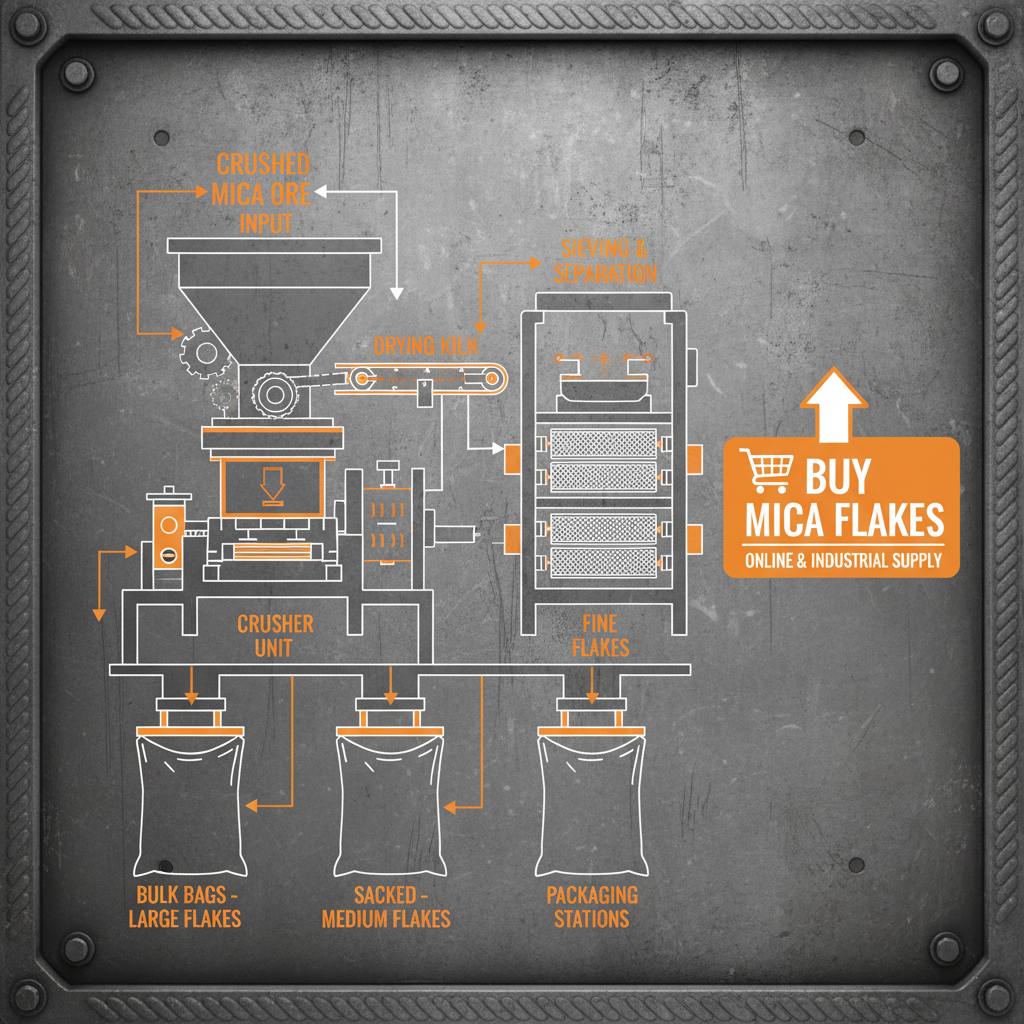
Modern processing has shifted toward dry impact technology to ensure that the natural properties of mica remain unchanged. Unlike wet milling, which can introduce moisture and chemical impurities, dry impact grinding uses high-velocity collisions to break down the mineral. This results in a high-purity white powder that retains its native heat resistance.
A totally closed production filling process is essential to eliminate airborne contaminants. By isolating the grinding and filling stages, manufacturers can guarantee that the purity remains at 99% minimum, preventing the introduction of foreign particles that could compromise the disruptive strength of the final composite.
Furthermore, patented classification screening ensures a uniform particle size distribution. This consistency is vital because irregular particle shapes or sizes can create weak points in a material, leading to premature failure under high-pressure or high-temperature conditions.
The industrial utility of Muscovite mica is rooted in its exceptional physical stability. With a melting point of 1250°C and heat resistance up to 650°C, it serves as an ideal barrier in environments where traditional polymers or metals would degrade.
Critical performance is defined by a combination of high insulation, a small thermal expansion coefficient, and robust resistance to both acids and alkalis, making mica indispensable for chemical processing environments.
Beyond heat, the disruptive strength of 146.5KV/mm allows these minerals to function as superior electrical insulators. This prevents electrical leakage in high-voltage applications, ensuring that the components remain safe and operational even under extreme electrical loads.
Particle size determines the functional role of mica. Coarser grades, such as 5-10 mesh, are primarily utilized in construction for waterproof and fire-prevention layers, where the larger flakes provide a physical shield and an adornment effect.
Conversely, finer powders (from 20 mesh down to 325 mesh) act as performance fillers. In these applications, the objective is to improve the mechanical properties of the base material, enhancing its rigidity and thermal stability without altering its overall weight significantly.
In the automotive sector, mica fillers are integrated into engine components and brake systems to manage heat dissipation and prevent electrical shorts. The low thermal expansion coefficient ensures that parts do not warp during rapid heating and cooling cycles, maintaining tight tolerances in precision engineering.
Oil field operations rely on mica's acid and alkali resistance to protect drilling equipment from corrosive underground fluids. By using these minerals in protective coatings and seals, operators can extend the lifespan of machinery in chemically aggressive environments, reducing maintenance downtime.
The industry is moving toward "just-in-time" delivery models, requiring manufacturers to maintain large capacity stockpiles and tailored logistics. This shift reduces the risk of production halts for end-users who operate in lean manufacturing environments.
Compliance with global standards, including ISO 9001:2015 and SMETA audits, has become a prerequisite for international trade. These certifications ensure that the mineral is not only high in purity but produced under ethical workplace conditions and sustainable environmental practices.
As we look toward the future, the integration of high-purity mica in electric vehicle (EV) battery insulation and lightweight composite materials is expected to drive demand for even finer, more consistent powder distributions.
Choosing the right grade requires a balance between purity, particle size, and the specific stressors of the application. A common error is selecting a mesh size based on cost rather than the required disruptive strength or filler efficiency.
When evaluating a calcined mica manufacturer, buyers should request data on iron content and sand percentages. Even trace amounts of iron can significantly lower the insulation properties of the mica, leading to potential failure in electrical applications.
The following framework provides a relative assessment of mica grades based on typical industrial requirements.
| Mesh Size | Primary Role | Key Stressor | Suitability |
|---|---|---|---|
| 5-10 Mesh | Construction Shield | Physical Impact | High (Structural) |
| 20-60 Mesh | Medium Filler | Thermal Cycling | Medium (General) |
| 100-200 Mesh | Precision Filler | Electrical Load | High (Insulation) |
| 325 Mesh | Fine Reinforcement | Chemical Erosion | High (Specialty) |
| Mixed Powder | Composite Base | Variable Stress | Medium (Hybrid) |
| Custom Grade | Niche Engineering | Extreme Temp | Critical (Tailored) |
Industrial grade mica, particularly from a specialized manufacturer, is distinguished by its high purity (often 99% minimum), strict particle size distribution, and specific physical properties such as high disruptive strength and heat resistance up to 650°C. Unlike general fillers, it is processed to maintain a low thermal expansion coefficient and resist acid/alkali corrosion, which is essential for high-voltage and high-temperature environments.
Mesh size dictates the interaction between the mica and the matrix material. Coarser mesh (5-10) creates a physical barrier suitable for waterproofing and fireproofing in construction. Finer mesh (100-325) allows for more uniform dispersion within a polymer or ceramic, enhancing the overall mechanical strength, improving electrical insulation, and ensuring that the material does not crack under thermal stress.
Dry impact technology is preferred because it preserves the natural crystalline properties of the mica. Wet grinding can introduce moisture and chemical residues that degrade the mineral's purity and electrical insulation capabilities. The dry process, combined with a closed-loop system, prevents contamination and ensures the powder remains silver-white with consistent physical properties.
Buyers should focus on the percentages of SiO2 (typically 44-47%), Al2O3 (32-34%), and especially Fe2O3. High iron content (Fe2O3) can compromise the electrical insulation and color of the mica. Additionally, checking the PH value (around 7.8) and the purity level (99% min) ensures the material will not react negatively with other chemical components in the final product.
Yes, mica is highly effective in oil field applications due to its acid and alkali resistance. It is often used in protective coatings, high-temperature seals, and as a filler in specialized lubricants or drilling fluids to withstand the corrosive nature of subsurface environments and extreme pressure/temperature variations.
For bulk industrial orders, lead times depend on the mesh specification and volume. Leading manufacturers utilize large capacity stockpiles to support "just-in-time" delivery. Logistics options typically include FCL/LCL sea freight, train, or air shipment, with tailored shipping marks to facilitate rapid customs clearance and inventory management for the end buyer.
The operational success of high-temperature and high-voltage systems depends on the invisible quality of the mineral fillers used in their construction. By prioritizing raw material purity and precise processing technologies, industries can significantly reduce the risk of material failure and extend the lifecycle of their critical assets.
As technical requirements evolve, the collaboration between engineers and a qualified calcined mica manufacturer becomes essential to develop tailored solutions that meet the precise demands of modern industrial environments.