Look, I’ve spent the last fifteen years on concrete jobsites – from high-rises in Dubai to small rural projects. You learn a thing or two about what works, and what doesn’t. Lately, I’ve been seeing more and more folks talking about – and using – mica chips for concrete. It’s not some brand new, overnight sensation; it’s a steady evolution in materials science addressing a real need for stronger, more durable, and frankly, more cost-effective concrete. We’re talking about enhancing a fundamental building block of modern civilization, and it’s showing some serious potential to improve how we build, and how long what we build lasts.
The construction industry is constantly under pressure. We’ve got to build faster, build smarter, and build greener. Traditional concrete, while robust, has its limitations: cracking, permeability, and a hefty carbon footprint. Mica chips for concrete aren’t a silver bullet, but they’re a significant step towards addressing these challenges. They’re offering a way to improve performance without completely overhauling established construction practices – that’s critical, because getting everyone to adopt something new is always the biggest hurdle.
What I’m seeing in the field is that these chips are really starting to deliver on their promise. It’s not just about theoretical gains in the lab; it's about fewer call-backs for repairs, reduced material waste, and a longer lifespan for the structures we build. That translates to real savings, both in the short and long term, and that's what matters to owners, contractors, and everyone in between.
Introduction to Mica Chips for Concrete
These aren’t your grandma’s concrete additives. Mica chips, essentially flakes of the mica mineral, are becoming increasingly integrated into concrete mixes. They act as a reinforcement, improving the concrete’s resistance to cracking and increasing its overall durability. I’ve seen them used on everything from airport runways to residential foundations, and the results are promising. It's a bit like adding rebar, but on a microscopic scale, distributed throughout the entire mix.
The beauty of mica chips for concrete is their versatility. They can be tailored to specific project needs – different sizes, different grades, different concentrations. It’s not a one-size-fits-all solution, and that’s important. A project in a harsh marine environment will require a different approach than one in a dry, inland climate. Understanding these nuances is crucial for getting the most out of the technology.
Global Relevance and Industry Context
The demand for durable infrastructure is global. The UN estimates that the world will need to invest trillions of dollars in infrastructure over the next few decades just to keep pace with population growth and urbanization. And with the increasing frequency of extreme weather events – floods, hurricanes, earthquakes – the need for resilient structures is more critical than ever. Mica chips for concrete offer a way to enhance that resilience, reducing the risk of costly repairs and ensuring the longevity of vital infrastructure.
The ISO standards for concrete performance are becoming more stringent, pushing the industry to seek out innovative solutions. We’re seeing a move away from purely volume-based specifications towards performance-based specifications. That means focusing on how well the concrete performs over its lifespan, not just its initial strength. Mica chips help address this shift, offering a demonstrable improvement in long-term durability and resistance to degradation.
From the Belt and Road Initiative to the infrastructure plans being rolled out in the US and Europe, governments worldwide are prioritizing infrastructure development. But they’re also increasingly focused on sustainability and lifecycle costs. That's where mica chips really shine – reducing the need for frequent repairs and replacements translates to a lower environmental impact and significant cost savings over the long haul.
Defining Mica Chips for Concrete
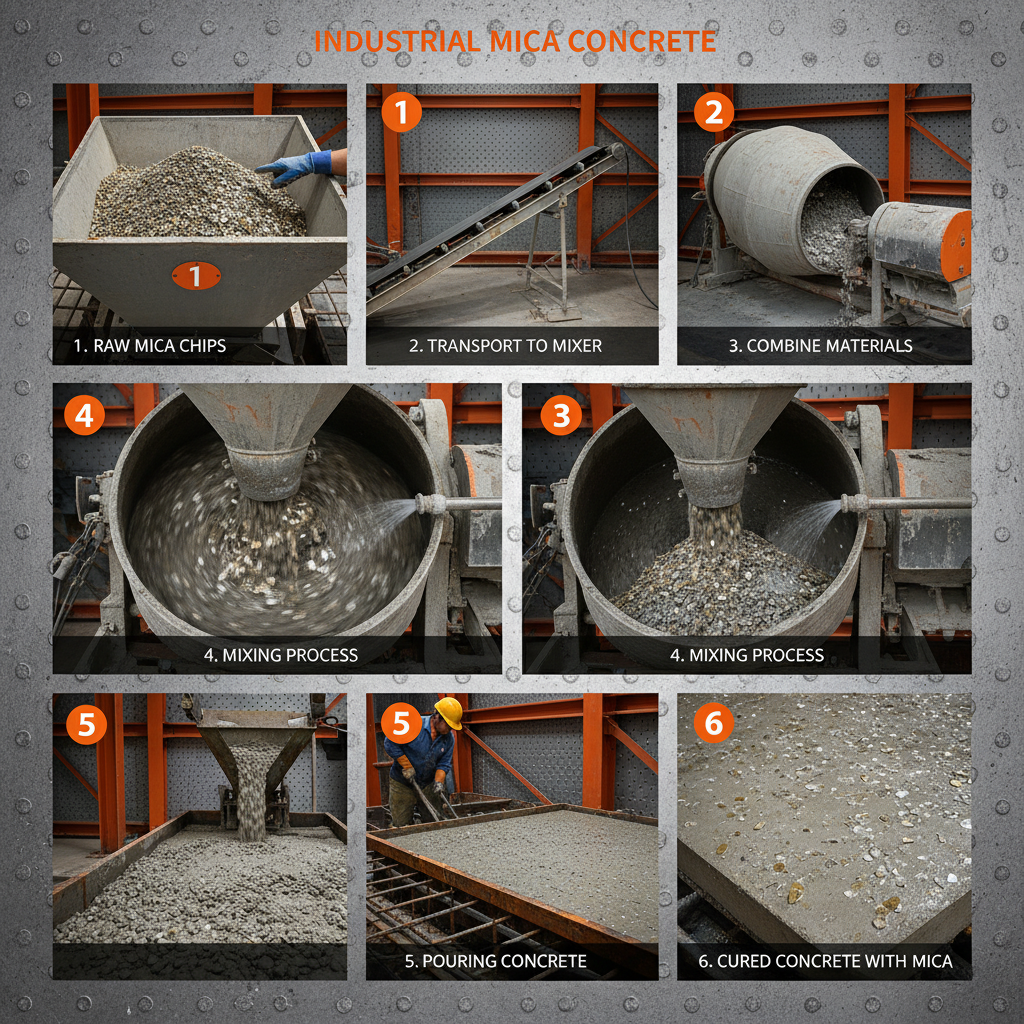
Simply put, mica chips for concrete are small, thin flakes of mica mineral added to the concrete mix. Mica is a naturally occurring silicate mineral known for its excellent cleavage – meaning it splits easily into these thin, flexible sheets. These sheets, when dispersed throughout the concrete, act like internal reinforcement, bridging micro-cracks and preventing them from propagating.
It’s not about drastically changing the chemistry of the concrete. It’s about improving its physical properties through a smart, simple addition. Think of it like adding fiber to your diet; it doesn't fundamentally change what you're eating, but it improves its overall health benefits. The key is proper dispersion within the concrete mix - you need even distribution for maximum effectiveness.
This technology connects directly to modern construction needs. We're building more complex structures, pushing the limits of concrete's capabilities. Mica chips allow us to meet those demands without resorting to more expensive or environmentally damaging alternatives. It's about making concrete smarter, not just stronger.
Key Performance Factors
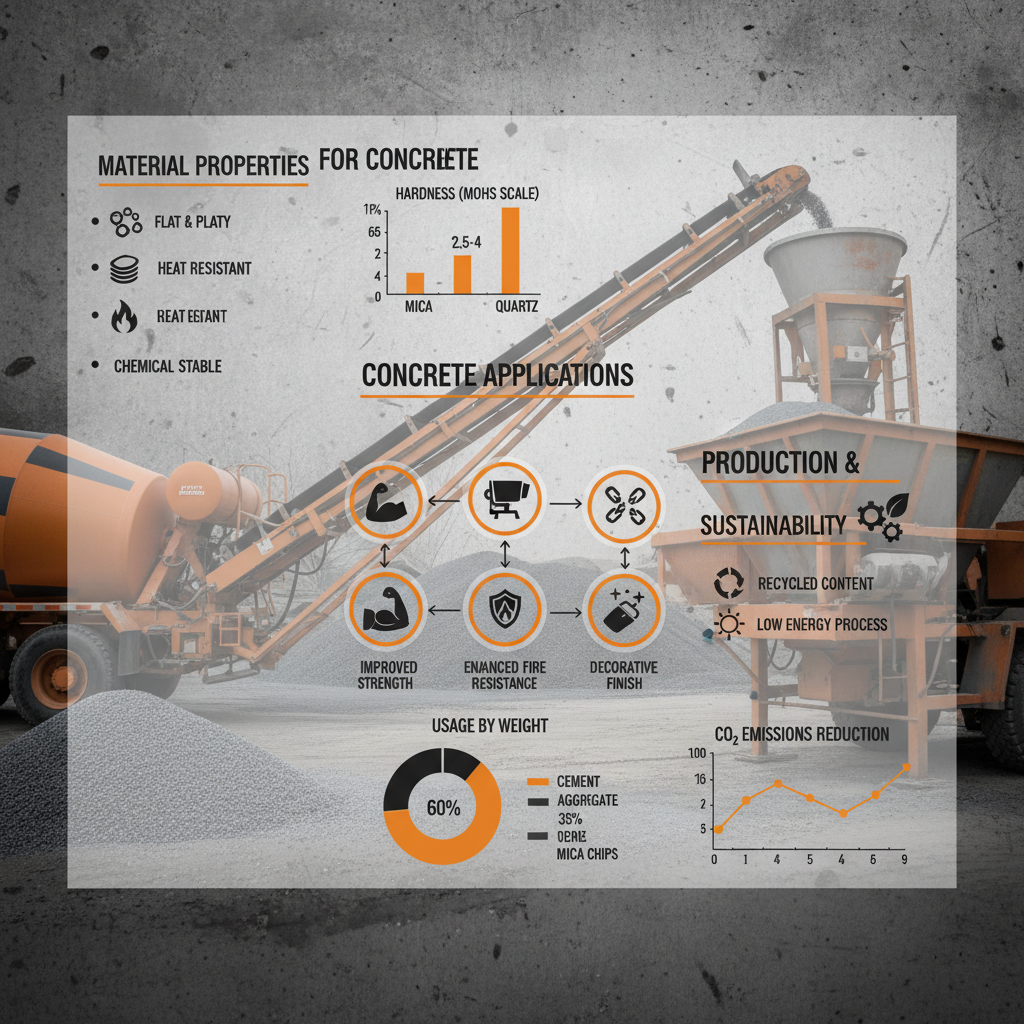
Durability is the biggest factor, hands down. Mica chips significantly improve concrete’s resistance to cracking, spalling, and freeze-thaw damage. I’ve seen projects where the concrete with mica chips held up remarkably well after years of exposure to harsh weather conditions, while comparable concrete without the chips showed significant signs of deterioration.
Workability is also crucial. You don’t want an additive that makes the concrete difficult to pour, finish, or pump. Good quality mica chips are designed to disperse evenly throughout the mix, minimizing any negative impact on workability. That’s something you really appreciate when you’re dealing with tight schedules and challenging site conditions.
Performance Ratings of Different Mica Chip Treatments
Global Applications and Use Cases
I’ve seen mica chips implemented in diverse projects. In post-disaster relief operations, they’ve been used in the construction of rapid-deployment shelters, offering a more durable and weather-resistant alternative to traditional materials. That’s critical in situations where time is of the essence.
In remote industrial zones, where access to maintenance and repair services is limited, mica chips are used to extend the lifespan of concrete structures like storage tanks and foundations. Reducing the need for frequent repairs saves a lot of money and logistical headaches.
Advantages and Long-Term Value
The cost savings are substantial. While the initial cost of adding mica chips might be slightly higher, the reduced maintenance, extended lifespan, and lower risk of premature failure more than compensate for that investment. It's a lifecycle cost analysis, and it almost always comes out in favor of using mica chips.
Sustainability is a growing concern, and mica chips contribute to more sustainable construction practices. By extending the life of concrete structures, we reduce the demand for new materials, lowering the environmental impact of construction. That's something we all need to be thinking about.
Future Trends and Innovations
Research is ongoing to optimize the size, shape, and surface treatment of mica chips for even greater performance. We're also exploring the use of different types of mica, and combining them with other additives to create synergistic effects.
I’m particularly excited about the potential of integrating mica chips with self-healing concrete technologies. Imagine concrete that can automatically repair cracks, further extending its lifespan and reducing maintenance costs. That's the future of construction.
Digitalization is also playing a role. Advanced sensors and data analytics are being used to monitor the performance of concrete structures with mica chips, providing valuable insights into their long-term behavior and enabling proactive maintenance.
Addressing Challenges and Finding Solutions
One challenge is ensuring consistent dispersion of the mica chips within the concrete mix. Poor dispersion can negate many of the benefits. That's where proper mixing techniques and quality control are essential. We're seeing manufacturers develop specialized mixing equipment to address this issue.
Another concern is the sourcing of mica. It's important to ensure that the mica is ethically sourced, avoiding conflict zones and respecting labor standards. Responsible sourcing is a non-negotiable.
Finally, education is key. Getting contractors and engineers comfortable with this new technology requires clear communication and training. Demonstrating the benefits through real-world case studies and pilot projects is the most effective way to drive adoption.
Summary of Challenges and Solutions Associated with Mica Chip Integration
| Challenge |
Impact on Project |
Potential Solution |
Implementation Cost (1-10) |
| Uneven Chip Dispersion |
Reduced Durability, Crack Propagation |
Specialized Mixing Equipment |
6 |
| Ethical Sourcing Concerns |
Reputational Risk, Supply Chain Disruption |
Supplier Audits, Traceability Systems |
8 |
| Lack of Industry Familiarity |
Slow Adoption Rate, Resistance to Change |
Educational Workshops, Case Study Sharing |
5 |
| Cost Fluctuations of Mica |
Project Budget Uncertainty |
Long-Term Supply Contracts |
7 |
| Limited Long-Term Performance Data |
Hesitation in High-Criticality Applications |
Continued Monitoring of Existing Projects |
4 |
| Potential for Chloride Ion Penetration |
Corrosion of Reinforcement |
Surface Sealants, Optimized Mix Designs |
6 |
FAQS
While the strength increase varies depending on the mix design and application, we generally see a 10-15% improvement in compressive strength and a more significant increase in flexural strength. Crucially, it's not just about higher numbers; it's about improved resistance to cracking and long-term durability, meaning the structure maintains its integrity for longer.
Mica chips are incredibly versatile, but they aren’t a universal fix. They perform exceptionally well in applications where durability and crack resistance are critical, like pavements, bridge decks, and marine structures. However, for projects where strength is the primary concern and durability is less important, they may not be the most cost-effective solution. A thorough assessment of project requirements is always essential.
The size of the mica chips is a critical factor. Smaller chips tend to improve workability and provide more uniform reinforcement, but they may have a lesser impact on overall strength. Larger chips offer greater strength but can make the mix more difficult to work with. The optimal size depends on the specific application and desired performance characteristics. We work with our clients to determine the best size for their needs.
Ethical sourcing of mica is paramount. There have been concerns about child labor in some mica mining regions, so it's vital to work with suppliers who can demonstrate responsible sourcing practices. We prioritize suppliers who are committed to fair labor standards and environmental protection. Choosing ethically sourced mica is a key part of sustainable construction.
The initial cost of mica chips is generally comparable to other high-performance concrete additives, such as silica fume or polymers. However, when you consider the long-term benefits – reduced maintenance, extended lifespan, and lower life cycle costs – mica chips often prove to be a more economical option. It's an investment that pays off over time.
Proper mixing is absolutely crucial. We recommend using a high-shear mixer to ensure the chips are evenly distributed throughout the concrete mix. Avoid overmixing, which can damage the chips. Following the manufacturer’s guidelines for mixing time and sequence is also essential. Proper dispersion maximizes the performance benefits of the mica chips.
Conclusion
Mica chips for concrete aren't a revolutionary overnight change, but a smart, incremental evolution in building materials. They offer a pragmatic solution to a growing number of challenges facing the construction industry – from improving durability and reducing maintenance to enhancing sustainability and lowering lifecycle costs. It’s a technology that’s grounded in real-world performance, backed by solid science, and demonstrating tangible benefits on jobsites around the globe.
I encourage anyone involved in concrete construction – engineers, architects, contractors, owners – to explore the potential of mica chips for their next project. Don’t just take my word for it, do your own research, run your own tests, and see for yourself the difference they can make. The future of construction isn’t just about building bigger and faster, it’s about building smarter and more sustainably, and mica chips are a key piece of that puzzle.