Advanced Industrial Insulation Solutions with mica muscovite in Japan

Providing high-purity non-metallic mineral products engineered for the precision requirements of Japanese electronics and automotive manufacturing.

Advanced Industrial Insulation Solutions with mica muscovite in Japan

Our comprehensive range of mica-based minerals provides unmatched thermal stability and electrical insulation, specifically tailored for the rigorous quality standards of the Japanese industrial sector.

Market Landscape of Mineral Dielectrics in Japan

Analyzing the demand for high-performance mica products within the Asia-Pacific technological hub.

Japan's manufacturing sector is characterized by an extreme commitment to "Monozukuri" (the art of making things), where the purity of mica powder is critical for the stability of high-frequency electronic components. The local market demands materials that can withstand the humid subtropical climate of the Japanese archipelago without compromising dielectric properties.

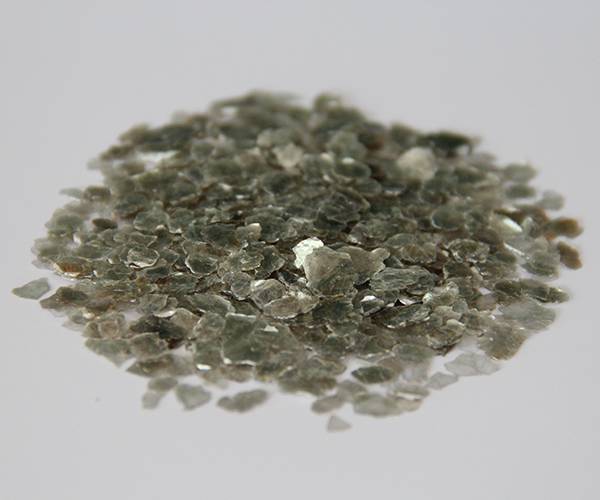
With a heavy concentration of automotive OEMs and semiconductor fabs, there is a consistent shift toward mica flake integration in heat-resistant composites. The Japanese industry prioritizes consistency in particle size distribution to ensure zero-defect production lines in precision molding.

Economic pressures and the drive toward carbon neutrality in Japan have pushed the non-metallic mineral industry to seek sustainable sourcing. This has led to a heightened focus on the chemical purity of muscovite-based products to reduce waste and improve the recyclability of industrial insulators.
Evolution of Mica Processing and Application

From traditional mineral extraction to nano-engineered industrial additives.

Market Development History

In the mid-20th century, Japan relied heavily on basic muscovite sheet for simple electrical insulation in heavy machinery and early power grids, focusing primarily on raw cleavage properties.

Between 1980 and 2010, the technological iteration shifted toward micronization. The industry transitioned from using bulk sheets to precision-ground mica coarse grades, allowing for the development of high-temperature plastics and reinforced ceramics.

From 2010 to the present, the focus has moved toward surface modification and ultra-fine purity. The integration of synthetic and highly purified natural mica has enabled the miniaturization of components in the 5G and EV sectors.

Future Development Trends

Nano-Scale Particle Engineering

The transition toward nano-mica to enhance the mechanical strength of polymers while maintaining transparency and electrical resistivity.

Eco-Friendly Sourcing Certification

Increased adoption of ESG-compliant minerals to meet the strict environmental regulations of the Japanese Ministry of Economy, Trade and Industry (METI).

Smart Thermal Interface Materials

Development of hybrid mica composites that offer anisotropic thermal conductivity for next-generation power modules.

Industry Trends and Future Outlook

Predicting the trajectory of non-metallic mineral applications in the Japanese high-tech corridor.

EV Battery Thermal Safety
Integrating specialized mica layers to prevent thermal runaway in electric vehicle battery packs.
5G Infrastructure Dielectrics
Utilizing ultra-low loss mica minerals for high-frequency signal transmission components.
Precision Ceramic Additives
Developing high-purity mineral fillers to reduce thermal expansion in precision ceramics.
Sustainable Mineral Sourcing
Implementation of closed-loop supply chains to minimize environmental impact in mining.

Industry Outlook

Google search trends in the Japanese industrial sector indicate a surging interest in "High-Temperature Insulation" and "Dielectric Stability." As the shift toward electrification accelerates, the demand for high-performance mica derivatives is expected to grow at a CAGR of 4.5% over the next 3-5 years.

The convergence of material science and automation will likely lead to the creation of "smart minerals" where mica's properties are tuned at the molecular level to provide specific resistivity gradients for the next generation of semiconductor packaging.

Localized Application Scenarios in Japan

Real-world implementation of mica mineral products in high-precision Japanese industries.

01. Automotive Power Module Insulation

Utilizing mica powder in the production of thermal interface materials for Toyota and Honda's next-gen EV inverters to ensure voltage isolation at high temperatures.

02. Consumer Electronics Miniaturization

Applying high-purity mica flakes in the capacitive layers of compact smartphones and wearables designed in Akihabara's tech hubs, ensuring signal clarity and heat dissipation.

03. Industrial Heating Element Coating

Using mica coarse particles in the ceramic coatings of industrial furnaces in the Aichi prefecture to prevent electrical leakage and enhance durability.

04. High-Voltage Transformer Dielectrics

Implementing precision-cut sheets in the insulation of high-voltage power transformers for Japan's smart grid infrastructure, preventing catastrophic arc flash events.

05. Aerospace Composite Components

Integrating muscovite minerals into lightweight composite materials for Japanese aerospace projects to provide fire-retardant properties and structural stability.

Brand Story

Global Development History of Shijiazhuang Rijia Import and Export Trade Co., Ltd.

Founding Vision

Established with the mission to bridge the gap between raw mineral wealth and precision industrial needs, focusing on purity and reliability.

Quality Standardization

Developed a rigorous multi-stage filtration process to meet the exacting standards of the Asia-Pacific electronics market.

Global Market Expansion

Successfully entered the Japanese market by providing customized mineral grades tailored for "Monozukuri" precision.

R&D Innovation

Invested in advanced micronization technology to produce ultra-fine powders for the semiconductor and 5G industries.

Future Commitment

Dedicated to sustainable mining and carbon-neutral supply chains to support the global transition to green energy.

Complete Mineral Portfolio for the Japanese Market

A curated selection of high-performance mica products designed for precision manufacturing.

Frequently Asked Questions for the Japan Region

Technical insights and procurement guidance for industrial mica products.

How does your mica powder ensure dielectric stability in high-humidity environments?

Our products undergo a specialized drying and surface treatment process that minimizes moisture absorption, ensuring stable resistivity even in Japan's humid coastal regions.

Can you provide specific particle size distributions for mica flake applications?

Yes, we provide full sieve analysis and laser diffraction reports to ensure the flakes meet the exact micron tolerances required for your molding processes.

What is the difference between mica coarse and fine grades for industrial use?

Coarse grades are typically used for structural reinforcement and bulk insulation, while fine grades are optimized for coatings and electronic filler applications.

Is your mica muscovite compliant with international environmental standards?

Our materials are RoHS and REACH compliant, ensuring they can be safely integrated into products exported from Japan to the EU and North America.

How is the muscovite sheet processed for maximum cleavage quality?

We use a controlled mechanical splitting technique that preserves the natural crystalline structure, ensuring maximum dielectric strength per layer.

What are the lead times for bulk shipments to the Port of Yokohama or Osaka?

Depending on the customization level, we typically maintain a strategic inventory that allows for shipping within 7-14 days to major Japanese ports.

Request a Technical Consultation

Our engineering team is ready to help you optimize your mineral specifications for the Japan market. Let's build the future of insulation together.

Contact Us Now

If you are interested in our products, you can choose to leave your information here, and we will be in touch with you shortly.