Sep . 01, 2025 06:20
Back to list
4-8mm Expanded Clay Pebbles for Soil Amendment: Enhance Drainage & Aeration
Industry Trends and the Role of Expanded Clay Pebbles
The global agricultural and horticultural sectors are undergoing a significant transformation, driven by increasing demands for sustainable practices, resource efficiency, and enhanced crop yields. Innovations in growing media play a pivotal role in this evolution, with a growing emphasis on inert, stable, and reusable substrates. Among these, 4-8mm Expanded Clay Pebbles for soil Amendment have emerged as a cornerstone solution, particularly in advanced cultivation systems like hydroponics, aquaponics, and soilless gardening.
Industry trends indicate a clear shift towards controlled environment agriculture (CEA), urban farming, and green infrastructure projects, such as extensive green roofs and vertical gardens. These applications necessitate lightweight, durable, and highly efficient growing media that can provide optimal aeration, drainage, and root support without compromising on environmental sustainability. The 4-8mm expanded clay aggregate size is specifically favored for its balanced physical properties, offering excellent capillary action and air porosity crucial for vigorous plant growth across a diverse range of botanical species. This technical article delves into the specifications, advantages, and applications of this versatile material, aiming to provide B2B decision-makers and agricultural engineers with comprehensive insights.
Technical Specifications and Product Overview
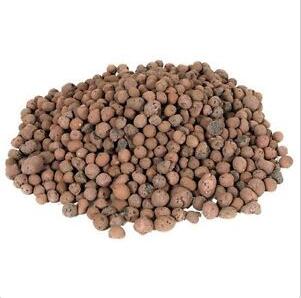
4-8mm Expanded Clay Pebbles for soil Amendment, often referred to as Lightweight Expanded Clay Aggregate (LECA), are manufactured from natural clay, heated in a rotary kiln to extremely high temperatures (around 1100-1200°C). This process causes the clay to expand and form a porous, cellular structure encapsulated by a hard, ceramic shell. The 4-8mm grading represents a critical size range, optimized for a balance between drainage efficiency, water retention capacity, and physical stability in various horticultural applications.
The inherent properties of these pebbles make them an ideal inert substrate. They are chemically neutral, pH-stable, and do not decompose, ensuring a consistent growing environment over extended periods. Their high porosity provides exceptional root aeration, preventing waterlogging and promoting robust root development, while also offering adequate surface area for beneficial microbial colonization. Below is a detailed table outlining typical technical specifications for high-quality expanded clay pebbles.
Product Specification Table: 4-8mm Expanded Clay Pebbles
| Property | Typical Value/Range | Unit |
|---|---|---|
| Particle Size Distribution | 95% within 4-8mm | mm |
| Bulk Density (Dry) | 280-350 | kg/m³ |
| Specific Gravity | Approx. 0.8-1.0 | - |
| Total Porosity | >80 | % (v/v) |
| Water Holding Capacity | Approx. 30-40 | % (w/w) |
| pH Range | 6.5-7.5 (neutral) | - |
| Electrical Conductivity (EC) | Very low, inert | dS/m |
| Compressive Strength | Robust, durable | (qualitative) |
| Service Life | Decades (reusable) | Years |
These characteristics make expanded clay pebbles suitable for diverse target industries including hydroponics, urban agriculture, greenhouse cultivation, professional landscaping, and the burgeoning field of green infrastructure development. The material’s resistance to decomposition and its inert nature contribute significantly to its long service life, making it a cost-effective and environmentally sound choice.
Manufacturing Process Flow for Expanded Clay Pebbles
The production of high-quality 4-8mm Expanded Clay Pebbles for soil Amendment involves a meticulously controlled multi-stage process, ensuring consistency, purity, and optimal physical properties. Adherence to strict manufacturing protocols and quality control measures is paramount for delivering a reliable horticultural substrate. The typical process flow is outlined below:
Schematic Process Steps:
-
Raw Material Procurement & Preparation:
High-quality, plastic clay (typically montmorillonite or kaolinite-rich) is extracted from designated quarries. The clay is then subjected to initial crushing, homogenization, and moisture content adjustment to achieve a consistent feedstock. This ensures uniform expansion during the firing phase.
-
Granulation/Shaping:
The prepared clay is fed into granulators, typically rotary drums or extruders, where it is formed into small, roughly spherical pellets. The size of these green pellets is critical as it dictates the final expanded size. For 4-8mm pebbles, the green pellets are carefully sized to allow for optimal expansion.
-
Pre-heating & Drying:
The green pellets are gently pre-heated to remove surface moisture and prevent thermal shock during rapid firing. This stage, often conducted in a dryer or the initial section of the rotary kiln, gradually raises the temperature.
-
Rotary Kiln Expansion (Firing):
The dried pellets enter a large, inclined rotary kiln, where they are subjected to rapid heating at temperatures between 1100°C and 1200°C. At this temperature, the organic matter within the clay oxidizes, releasing gases that cause the clay to bloat and expand. Simultaneously, the outer surface vitrifies, forming the characteristic hard, durable ceramic shell. This process is similar to a specialized form of pyroprocessing.
-
Cooling:
After expansion, the hot, lightweight clay pebbles are discharged from the kiln into a cooling unit, often a rotary cooler or a fluid bed cooler. Gradual cooling is essential to prevent thermal stress and maintain the structural integrity of the expanded pebbles.
-
Sieving & Grading:
The cooled expanded clay is then passed through a series of sieves to sort it into precise particle size fractions. This is where the 4-8mm specification is achieved, with oversized and undersized particles being separated for other applications or reprocessing. This step is critical for ensuring product uniformity.
-
Quality Control & Packaging:
Throughout the entire process, rigorous quality control checks are performed, adhering to standards such as ISO 9001 for manufacturing and relevant horticultural substrate guidelines (e.g., DIN 18915 for soil substrates). This includes regular testing for bulk density, pH, particle size distribution, porosity, and absence of impurities. Finally, the sorted 4-8mm Expanded Clay Pebbles for soil Amendment are packaged in various formats (e.g., bags, bulk sacks) for distribution.
This detailed process ensures that the final product offers consistent performance and meets the high standards required for demanding horticultural and environmental applications. The emphasis on controlled firing and precise grading directly translates into advantages such as optimal aeration and drainage, critical for energy-saving and corrosion resistance in sensitive hydroponic systems.
Key Technical Advantages in Application Scenarios
The unique physical and chemical properties of 4-8mm Expanded Clay Pebbles for soil Amendment translate into significant advantages across numerous application scenarios, offering both operational efficiencies and improved plant health.
- Optimal Aeration and Drainage: The irregular, porous structure ensures high air-filled porosity, preventing root suffocation and promoting robust root zone oxygenation. Concurrently, their excellent drainage capabilities prevent waterlogging, a common issue in traditional soil-based systems. This is particularly crucial in hydroponics where precise moisture and air balance are essential for nutrient uptake.
- Superior Water Retention: Despite excellent drainage, the internal pores of the pebbles absorb and retain a substantial amount of water, acting as a reservoir for plants. This reduces watering frequency, conserves water resources, and ensures consistent moisture availability, directly contributing to energy savings in irrigation systems.
- pH Stability and Inertness: Expanded clay pebbles are chemically inert and pH-neutral, which means they do not alter the pH of nutrient solutions or growing environments. This allows growers precise control over nutrient delivery, crucial for specialized crops and avoiding issues like nutrient lockout. Their non-reactive nature also offers excellent corrosion resistance for hydroponic system components.
- Sterile and Pest-Resistant: The high-temperature firing process sterilizes the clay, making it free from pathogens, weeds, and insect larvae. This significantly reduces the risk of soil-borne diseases and pest infestations, minimizing the need for chemical treatments and promoting healthier plants.
- Durability and Reusability: Unlike organic substrates that decompose, expanded clay pebbles are highly durable and maintain their structure over decades. They can be sterilized and reused multiple times, offering a sustainable and cost-effective long-term solution.
- Lightweight Aggregate: Their low bulk density makes them ideal for applications where weight is a concern, such as green roofs, vertical gardens, and large container111 plantings. This reduces structural load and simplifies handling and installation.
These advantages underscore why 4-8mm Expanded Clay Pebbles for soil Amendment are increasingly chosen by commercial growers and landscape architects seeking to optimize growth conditions, minimize resource consumption, and enhance the longevity of their systems.
Application Scenarios and Case Studies
The versatility of 4-8mm Expanded Clay Pebbles for soil Amendment allows for their integration into a wide array of horticultural and environmental engineering applications. Their unique properties solve critical challenges in modern cultivation and green infrastructure.
Primary Application Scenarios:
- Hydroponics and Aquaponics: As a leading inert substrate, they are fundamental in deep water culture (DWC), nutrient film technique (NFT), ebb & flow systems, and drip irrigation setups. They provide stable support, excellent aeration, and consistent moisture, facilitating efficient nutrient delivery and absorption. In aquaponics, they also serve as an ideal biofilter medium.
- Container Gardening and Potting Mix Amendment: When mixed with traditional potting soil or coco coir, expanded clay pebbles dramatically improve drainage and aeration, preventing compaction and enhancing root health. They are also used as a standalone medium for semi-hydroponic systems for houseplants.
- Green Roofs and Vertical Gardens: Their lightweight nature, coupled with excellent drainage and water retention, makes them an ideal component for extensive green roof systems, living walls, and vertical farms. They reduce the structural load on buildings while supporting diverse plant palettes.
- Drainage Layers and Sub-irrigation: In large-scale landscaping, raised garden beds, and sports fields, a layer of expanded clay pebbles provides an effective drainage solution, preventing waterlogged conditions and promoting healthy root development. They can also be used in sub-irrigation systems to ensure uniform moisture distribution.
- Water Filtration and Biofilters: In certain environmental engineering applications, their porous structure and inertness make them suitable for basic water filtration and as a medium for biological filters in ponds and aquaculture systems, fostering beneficial bacterial growth.
Application Case Studies:
Case Study 1: Large-Scale Commercial Hydroponic Greenhouse
A prominent commercial greenhouse specializing in leafy greens and herbs implemented 4-8mm expanded clay pebbles across 10,000 square meters of its hydroponic deep water culture (DWC) systems. Prior to this, they experienced issues with inconsistent oxygen levels in the root zone and occasional disease outbreaks in rockwool. Post-implementation, the greenhouse reported a 15% increase in yield per cycle, attributed to enhanced root oxygenation and stability. Furthermore, disease incidence dropped by 80%, significantly reducing fungicide use and operational costs. The reusability of the clay pebbles also translated into substantial long-term savings on substrate procurement.
Case Study 2: Urban Vertical Farm Initiative
An urban vertical farm in a densely populated metropolitan area adopted 4-8mm expanded clay pebbles as the sole growing medium for its multi-tiered cultivation racks. The primary considerations were lightweight properties, moisture management, and hygiene. The low bulk density of the pebbles enabled the installation of more tiers without exceeding structural load limits. The consistent moisture delivery and excellent drainage supported diverse crop growth, from microgreens to larger fruiting plants. The sterile nature of the pebbles proved invaluable in maintaining a disease-free environment in a high-density, closed-loop system, demonstrating robust performance under intensive growing conditions.
Vendor Comparison and Customized Solutions
Selecting the right supplier for 4-8mm Expanded Clay Pebbles for soil Amendment is crucial for ensuring the success and longevity of any cultivation project. Not all expanded clay pebbles are created equal, and variations in raw material quality, manufacturing processes, and post-processing can significantly impact performance.
Key Factors for Vendor Comparison:
- Consistency in Particle Size & Shape: Reputable vendors ensure tight control over the 4-8mm grading, minimizing fines and oversized particles. Uniformity is critical for consistent water flow and root distribution.
- Dust Content: Lower dust content indicates a cleaner, higher-quality product that requires less rinsing before use, saving time and water.
- pH Neutrality & Chemical Inertness: Verified pH stability and absence of leachable impurities are non-negotiable for professional applications.
- Physical Durability: High-quality pebbles should resist crushing and degradation over time, especially important for reusable systems.
- Certifications & Quality Control: Look for suppliers adhering to international standards (e.g., ISO 9001) and specific horticultural certifications.
- Supply Chain Reliability: For large-scale projects, consistent availability and efficient logistics are vital.
- Technical Support: Access to expert advice for specific application challenges can be invaluable.
Product Comparison: Expanded Clay Pebbles vs. Common Substrates
| Feature | Expanded Clay Pebbles (4-8mm) | Rockwool | Coco Coir | Perlite |
|---|---|---|---|---|
| Inertness/pH Stability | Excellent (neutral, stable) | Good (high pH initially, needs conditioning) | Moderate (can vary, may leach salts) | Excellent (neutral, stable) |
| Aeration/Drainage | Excellent | Good (can be too dense) | Good (can compact) | Excellent |
| Water Retention | Good (internal porosity) | Excellent (holds water well) | Excellent | Poor (mostly for drainage) |
| Reusability/Durability | Excellent (multi-decade life) | Limited (degrades) | Limited (decomposes) | Good (but can break down) |
| Sterility/Pest Resistance | Excellent (sterile) | Good (sterile initially) | Moderate (can harbor pests if untreated) | Excellent (sterile) |
| Environmental Impact | Low (reusable, sustainable) | Moderate (non-biodegradable waste) | Low (renewable, biodegradable) | Low (inert, mined) |
Customized Solutions:
Recognizing that diverse agricultural and landscaping projects have unique requirements, leading suppliers offer customized solutions. This can include bespoke particle size blends (e.g., mixing 4-8mm with smaller or larger fractions for specific water retention/drainage profiles), custom packaging options for bulk orders or retail, and tailored delivery schedules to integrate seamlessly with project timelines. Collaborating with a vendor capable of providing these bespoke services ensures that the 4-8mm Expanded Clay Pebbles for soil Amendment perfectly align with the operational and agronomic objectives of the client.
Authoritativeness and Trustworthiness: Our Commitment
Building trust and demonstrating authority in the B2B sector is paramount. Our commitment to quality for 4-8mm Expanded Clay Pebbles for soil Amendment is underpinned by robust certifications, transparent operations, and dedicated customer support.
Certifications & Quality Assurance:
Our manufacturing facilities adhere to stringent quality management systems, often certified under ISO 9001, ensuring consistent product quality and process reliability. Each batch of expanded clay pebbles undergoes rigorous testing for key parameters such as particle size distribution, pH, bulk density, and total porosity, often exceeding industry standards like ASTM E2169-14 (Standard Test Method for Bulk Density of Horticultural Growing Media). Our long-standing partnerships with leading agricultural research institutions and commercial growers validate the efficacy and reliability of our products.
Frequently Asked Questions (FAQ):
- Q1: Do 4-8mm Expanded Clay Pebbles need to be rinsed before use?
- A1: While our manufacturing process minimizes dust, a light rinse with clean water is generally recommended, especially for hydroponic systems, to remove any fine particulate matter that could settle or affect initial nutrient solution clarity. This ensures optimal system performance.
- Q2: How do I sterilize expanded clay pebbles for reuse?
- A2: Expanded clay pebbles can be effectively sterilized by soaking them in a diluted hydrogen peroxide solution (e.g., 3-5%), a mild bleach solution (1:10 ratio with water), or boiling water for 15-30 minutes. Ensure thorough rinsing afterward to remove any chemical residues before reuse.
- Q3: What is the typical lead time for bulk orders of 4-8mm Expanded Clay Pebbles?
- A3: For standard bulk orders, our lead time typically ranges from 2-4 weeks, depending on order volume and current inventory levels. We recommend contacting our sales team for precise lead times on customized or very large orders to ensure seamless fulfillment and delivery.
- Q4: Are these expanded clay pebbles suitable for organic certification?
- A4: As an inert, inorganic substrate, 4-8mm expanded clay pebbles themselves do not introduce organic contaminants. Their suitability for organic certification depends on the overall growing system and the specific organic standards being followed. Many organic certification bodies approve inert media when used with organic nutrient sources.
Lead Time & Fulfillment:
We maintain robust inventory management and logistics capabilities to ensure timely delivery for projects of all scales. Our efficient supply chain is designed to handle orders from palletized shipments to full container111 loads, ensuring that your project deadlines are met without compromise. Customized delivery schedules and expedited shipping options can be arranged upon request.
Warranty & Customer Support:
We stand behind the quality of our 4-8mm Expanded Clay Pebbles for soil Amendment with a comprehensive product warranty, guaranteeing material integrity and performance as per published specifications. Our dedicated customer support team, composed of technical experts and horticultural specialists, is available to provide pre-sales consultation, post-purchase assistance, and troubleshooting advice. We are committed to fostering long-term partnerships through exceptional product quality and unparalleled service.
Conclusion
The increasing global imperative for sustainable agriculture and efficient resource utilization positions 4-8mm Expanded Clay Pebbles for soil Amendment as an indispensable component in modern cultivation. Their unique blend of inertness, optimal porosity, pH stability, and durability makes them a superior choice for hydroponics, urban farming, green infrastructure, and various other specialized horticultural applications. By offering unparalleled control over the root environment, minimizing disease risks, and providing a reusable, eco-friendly solution, these expanded clay pebbles significantly contribute to enhanced yields, reduced operational costs, and environmental stewardship. Partnering with a reputable supplier committed to quality, customization, and robust support ensures that these benefits are fully realized, driving success in an evolving agricultural landscape.
Authoritative Citations
- Jones, J.B. (2005). Hydroponics: A Practical Guide for the Soilless Grower. CRC Press.
- Savvas, D., & Gruda, N. (2018). Hydroponics and Soilless Cultivation: Developments and Innovations. CRC Press.
- Nelson, P.V. (2012). Greenhouse Operation and Management. Prentice Hall.
- Standards for Horticultural Growing Media, European Committee for Standardization (CEN) Technical Committee 223.
- ISO 9001: Quality Management Systems - Requirements. International Organization for Standardization.
Latest news
-
Technical Benefits of Calcined Mica for Welding ElectrodesNewsApr.09,2026
-
Superior Calcined Mica for Electrical Insulators Applications and BenefitsNewsApr.07,2026
-
Exploring the Versatility of Calcined Mica for Decoration and Diverse ApplicationsNewsApr.04,2026
-
Exploring Calcined Mica Properties Applications and Sourcing OptionsNewsMar.31,2026
-
Exploring the Versatile Applications of Mica Flakes Powder Across IndustriesNewsMar.28,2026
-
Synthetic Mica Flakes- Kehui Mica Co.|Heat-Resistant, High WhitenessNewsMar.27,2026
-
Synthetic Mica Flakes- Kehui Mica Co.|Heat-Resistant, High WhitenessNewsMar.27,2026
Related Products