High-Performance mica muscovite Solutions for Hungarian Industrial Manufacturing

Precision-engineered non-metallic mineral products designed to enhance thermal insulation and dielectric strength across Hungary's diverse manufacturing sectors.

High-Performance mica muscovite Solutions for Hungarian Industrial Manufacturing

Providing the Hungarian industrial market with premium grade muscovite minerals, ensuring superior chemical stability and heat resistance for specialized non-metallic mineral applications.

The State of Non-Metallic Mineral Manufacturing in Hungary

Analyzing the synergy between Hungary's geological assets and industrial mineral demand.

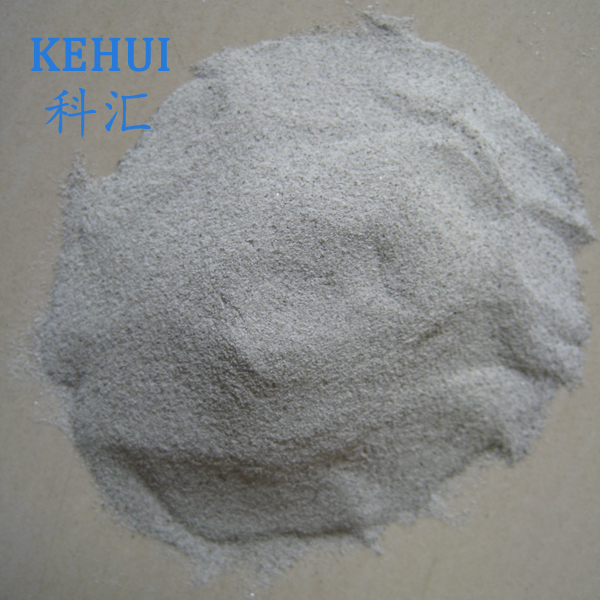
Hungary's manufacturing landscape, particularly in the Central European hub, relies heavily on high-purity minerals to support its automotive and electronics sectors. The integration of mica powder has become essential for developing heat-resistant coatings and composite materials that withstand the rigorous temperature fluctuations of the region's continental climate.

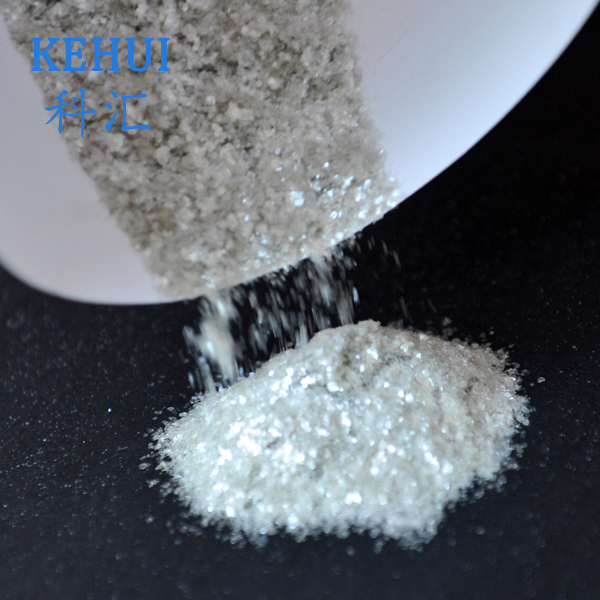
Local industries are currently transitioning toward more sustainable, high-efficiency mineral fillers. There is a growing demand for mica flake to improve the mechanical strength of industrial polymers, reflecting Hungary's strategic move toward becoming a high-tech manufacturing center in the EU.

Despite a strong traditional base in mineral processing, Hungarian enterprises are now seeking advanced specifications of mica coarse materials to optimize the filtration and insulation properties of heavy machinery used in the country's metallurgical and chemical plants.
Evolution and Trajectory of Mica Application in Hungary

From traditional insulation to nanostructured mineral engineering.

Market Development History

In the early 20th century, Hungary utilized basic mineral sheets for simple electrical insulation. By the 1970s, the industry shifted toward standardized muscovite sheet production to support the expansion of the regional power grid and electrical appliance manufacturing.

Entering the 1990s, the focus pivoted toward precision grinding. The introduction of automated milling allowed for the creation of consistent particle sizes, enabling the use of micronized muscovite in high-performance paints and specialized construction materials across Budapest and Debrecen.

Since 2010, the trajectory has been defined by the "Smart Material" era. The fusion of traditional mica processing with polymer chemistry has led to the development of advanced composites that offer both thermal shielding and electrical isolation for the EV battery plants currently emerging in Hungary.

Future Development Trends

Nanoscale Mineral Integration

Increasing demand for ultra-fine particles to enhance the barrier properties of protective coatings in aerospace and automotive components.

Sustainable Sourcing Protocols

A shift toward ethically sourced and chemically pure minerals to comply with strict EU REACH regulations and environmental mandates.

Hybrid Composite Engineering

Combining muscovite minerals with graphite and other non-metallic elements to create multifunctional thermal management systems.

Future Trends and Strategic Outlook

Predicting the next 3-5 years of mineral evolution in the Hungarian market.

EV Battery Thermal Shielding
The surge of battery gigafactories in Hungary will drive demand for high-dielectric mica composites.
Eco-Friendly Mineral Fillers
Replacing synthetic polymers with natural muscovite to meet EU green deal sustainability targets.
Precision Dielectric Grading
Advanced classification of mica particles to serve the semiconductor assembly industry.
Automated Quality Control
AI-driven sorting for mineral purity and flake size consistency.

Industry Outlook

Based on Google search trends in Central Europe, there is a significant uptick in queries related to "high-temperature dielectric materials" and "industrial mineral fillers." This indicates a pivot toward more sophisticated material science within Hungary's manufacturing core.

We expect the market to evolve from bulk supply to customized, specification-driven mineral engineering, where the chemical purity and morphology of the muscovite are tailored to the end-user's specific thermal requirements.

Local Application Scenarios in Hungary

Real-world integration of mica products in Hungarian industrial infrastructure.

1. Automotive Battery Insulation

Utilizing specialized muscovite composites to prevent thermal runaway in lithium-ion battery packs produced in Hungarian gigafactories.

2. Industrial Ceramic Glazes

Integrating fine mica powder into traditional Hungarian ceramic manufacturing to enhance heat resistance and surface luster.

3. Heavy Machinery Electrical Shields

Applying thick muscovite sheets as primary insulation for high-voltage transformers in the regional energy grid.

4. Anti-Corrosive Industrial Coatings

Using mica flakes as a reinforcing agent in protective coatings for steel structures exposed to Hungary's winter humidity.

5. Precision Electronic Component Potting

Incorporating micronized muscovite into potting compounds for automotive ECU modules to ensure dielectric stability.

Brand Story

Global Development Journey of Shijiazhuang Rijia Import and Export Trade Co., Ltd.

Foundational Excellence

Established with a mission to bridge the gap between raw mineral extraction and high-precision industrial requirements.

Technical Innovation

Developed advanced purification processes to solve the common industry pain point of mineral impurities in high-voltage applications.

European Market Expansion

Strategically entered the European market, focusing on the rigorous quality standards of Central European manufacturing hubs.

Customer-Centric Engineering

Shifted from a supplier model to a solution partner, providing tailored particle size distributions for specific industrial needs.

Global Sustainability Vision

Committing to green mining and ethical trade, ensuring a stable and sustainable supply chain for our global partners.

Comprehensive Mineral Portfolio for the Hungarian Market

A complete range of non-metallic mineral products designed for European industrial standards.

Hungarian Industrial Mineral FAQ

Expert answers to common technical questions regarding mica applications.

How does high-purity mica powder improve thermal stability in coatings?

High-purity mica creates a plate-like structural barrier that slows down heat transfer and prevents the penetration of corrosive agents, significantly extending the lifespan of industrial coatings.

What is the difference between mica flake and muscovite sheet for insulation?

Mica flakes are used as fillers in composites and polymers, whereas muscovite sheets provide structural, rigid electrical insulation for high-voltage components.

Can mica coarse materials be used in high-temperature filtration?

Yes, the coarse grain size provides the necessary permeability while maintaining the chemical inertness required for aggressive industrial filtration environments.

Are your muscovite products compliant with EU REACH regulations?

Absolutely. All our mineral products are processed and documented to meet the strict health and environmental safety standards required for import into Hungary and the EU.

Which mica grade is best for automotive battery potting compounds?

A blend of micronized mica powder and specific flake sizes is recommended to achieve the optimal balance of dielectric strength and thermal conductivity.

How do I specify the required particle size for my industrial application?

You can specify based on the mesh size or D50/D90 particle size distribution. Our engineers can help you select the right grade based on your material's viscosity and performance needs.

Get Expert Mineral Consultation

Partner with a leader in non-metallic mineral manufacturing to optimize your industrial production in Hungary.

Contact Us Now

If you are interested in our products, you can choose to leave your information here, and we will be in touch with you shortly.