Hydroponic Growing Media Expanded Clay Balls — field notes from a grower’s notebook
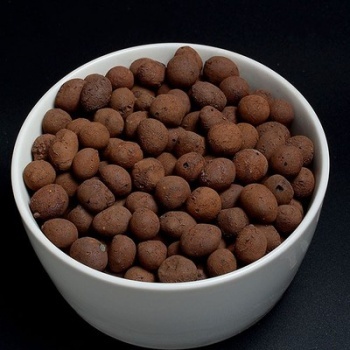
If you’ve been around hydroponics long enough, you eventually land on LECA. To be honest, I resisted at first. Then I saw roots threading cleanly through the spheres, drains running clear, and EC staying steady week after week. That’s when Hydroponic Growing Media Expanded Clay Balls became my default for seedling starts, DWC baskets, and aquaponic beds.
What’s trending (and why growers care)
The industry is moving toward clean, reusable media that balances capillary action with airflow. LECA checks those boxes. In fact, many customers say transplant shock drops noticeably because roots get oxygen without waterlogging. Another trend: data-backed quality—publish the pH drift, the dust percentage, the compression strength. The better vendors do.
Origin and make
Origin: Nanjialiang Village, Lingshou County, Shijiazhuang City, Hebei, China. Material: 100% clay, kiln-expanded into lightweight, porous spheres. The result? Hydroponic Growing Media Expanded Clay Balls with excellent pH and EC stability for hydroponic and aquaponic gardening.
Typical specifications (real-world use may vary)
| Parameter | Spec (≈) | Test Method |
|---|---|---|
| Particle size options | 4–8 mm, 8–16 mm, 16–25 mm | EN 13055 sieving |
| Bulk density | ≈ 320–450 kg/m³ | ASTM C29/C29M |
| Water absorption | ≈ 15–25% | EN 1097-6 |
| Porosity | ≈ 65–75% | Mercury intrusion (lab) |
| Compressive strength | > 1.5 MPa (single pellet) | EN 13055 guidance |
| pH after 24 h soak | ≈ 6.8–7.5 | Grower soak test |
| EC (runoff) | Conductivity meter | |
| Dust fines | ≤ 1.5% by mass | Dry sieve |
How it’s made (quick process flow)
Hydroponic Growing Media Expanded Clay Balls are produced by: clay selection → pelletizing → drying → rotary kiln expansion at ≈1100–1200°C → cooling → sieving and de-dusting → optional washing → packaging. Quality checks include pH/EC soak tests, bulk density (ASTM C29), and size grading (EN 13055). Service life: around 3–5 years in continuous hydroponics; many growers report 8–10 reuse cycles with peroxide sterilization between harvests.
Applications and advantages
- Hydroponics: net pots, flood-and-drain, drip rings.
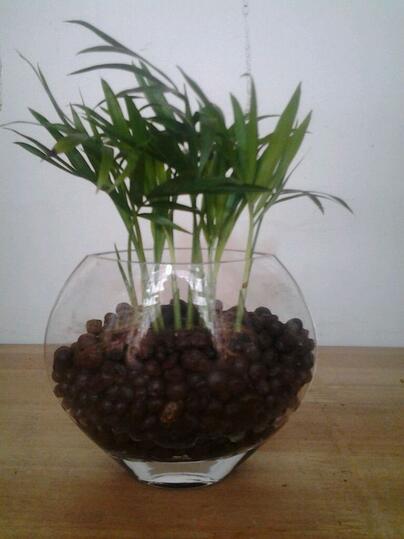
- Aquaponics: biofiltration beds (excellent surface area).
- Green roofs and drainage layers in landscaping.
- Nursery propagation; orchids love the airflow.
Pros: reusable, inert, lightweight, fast drainage with capillary “wicking.” Cons: rinse before first use (there’s always a bit of dust), and in very hard water, initial pH may creep up slightly—nothing a brief pre-soak can’t fix.
Vendor snapshot (what buyers compare)
| Vendor | Origin | Sizes | pH/EC stability | Certs | Price/L (≈) |
|---|---|---|---|---|---|
| KeHui Minerals | Hebei, CN | 4–25 mm | Stable after soak | ISO 9001, REACH | $0.18–0.28 |
| EU Brand A | EU | 4–16 mm | Very stable | EN 13055, ISO 14001 | $0.32–0.45 |
| Generic Import | Mixed | 8–16 mm | Varies | — | $0.12–0.20 |
Customization and packaging
Custom sieving (e.g., 10–14 mm), pre-washed or sterilized batches, OEM bags (5L/10L/50L) or 1–2 m³ super sacks. I guess the biggest win is pre-rinsed media for commercial farms—it saves startup time.
Mini case study
A leafy-greens facility in the Gulf switched to Hydroponic Growing Media Expanded Clay Balls in NFT starter cups. Result: 7% faster rooting, 12% lower incidence of pythium after improving drain-back and adopting a 3% H₂O₂ turnaround clean. Anecdotal? Sure. But their weekly EC logs backed it up.
Compliance and references
- Manufactured under ISO 9001:2015 quality systems; REACH compliant (no hazardous substances intentionally added).
- Aggregate properties aligned with EN 13055 for lightweight aggregates; bulk density tested per ASTM C29.
- Food-contact water leachables can be screened to NSF/ANSI 61 where required (ask for a lot report).
Authoritative citations:
- EN 13055: Lightweight aggregates for concrete, mortar and grout. https://standards.iteh.ai
- ASTM C29/C29M: Standard Test Method for Bulk Density of Aggregates. https://www.astm.org/c0029_c0029m
- FAO: Soilless culture (hydroponics) for horticulture. https://www.fao.org/3/i8688en/i8688en.pdf
- ISO 9001:2015 Quality Management Systems. https://www.iso.org/iso-9001-quality-management.html
- NSF/ANSI/CAN 61: Drinking Water System Components – Health Effects. https://www.nsf.org
Latest news
-
Global Analysis and Trends of the Calcined Mica Flakes MarketNewsApr.16,2026
-
Technical Benefits of Calcined Mica for Welding ElectrodesNewsApr.09,2026
-
Superior Calcined Mica for Electrical Insulators Applications and BenefitsNewsApr.07,2026
-
Exploring the Versatility of Calcined Mica for Decoration and Diverse ApplicationsNewsApr.04,2026
-
Exploring Calcined Mica Properties Applications and Sourcing OptionsNewsMar.31,2026
-
Exploring the Versatile Applications of Mica Flakes Powder Across IndustriesNewsMar.28,2026
-
Comprehensive Guide to 100 Mesh Mica Powder Applications and Industrial BenefitsNewsMar.26,2026
Related Products